
So where do I put my head and heart on? 2/n
1) Caste discrimination & atrocities
2) Caste based inequality in education, land, housing/other assets, income, health, etc.
3) Social structure based on Varna & Jatis
As social movements/activists, how do we prioritize & how much time & energy we devote to each of them? 1/n
So where do I put my head and heart on? 2/n
At a societal level, who should do what? 3/n
More from Economy


1/OK, let's take a little break from Coup Twitter, and think about an economic issue:
How can we build up the wealth of the middle class?
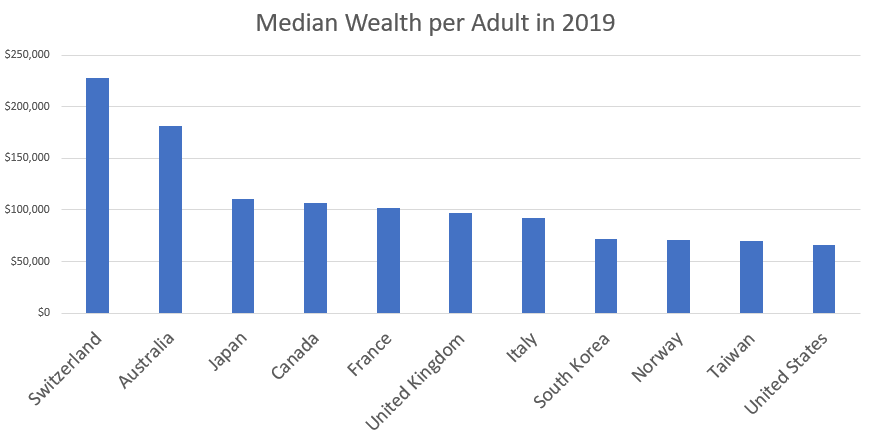
2/The typical American has surprisingly little wealth compared to the typical resident of many other developed countries.
This is a fact that is not widely known or appreciated.
3/Now, some people argue that stuff like Social Security or social insurance programs should be included in wealth. But I chose to focus on private wealth because I think having assets you can sell whenever you want is important to
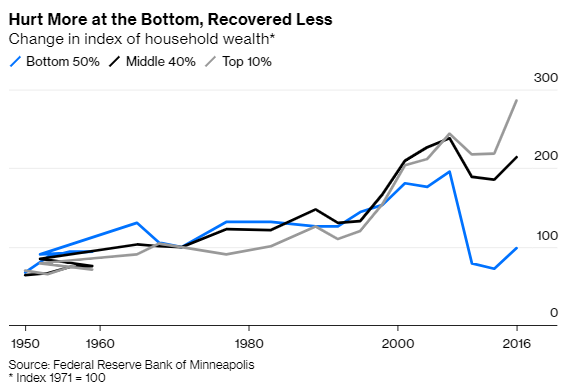
4/For many decades after World War 2, middle-class wealth in America was on a smooth upward trajectory.
Then the housing crash came, and all that changed. Suddenly the rich were still doing well but everyone else was seeing the end of their American Dream.
5/Why the divergence?
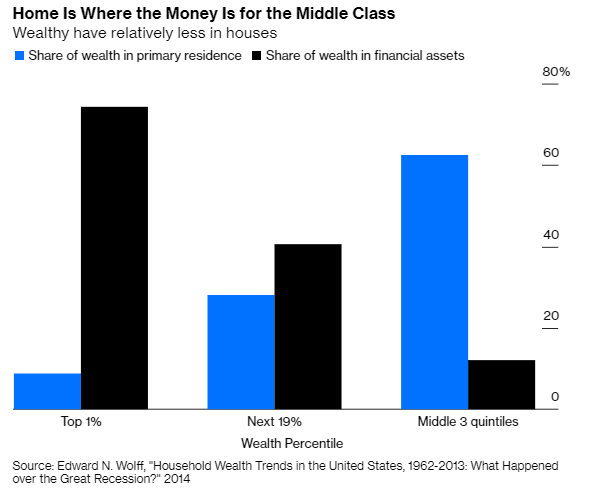
Because the American middle class has its wealth in houses -- specifically, in the houses they live in.
It's the rich who own stocks.
How can we build up the wealth of the middle class?
2/The typical American has surprisingly little wealth compared to the typical resident of many other developed countries.
This is a fact that is not widely known or appreciated.
3/Now, some people argue that stuff like Social Security or social insurance programs should be included in wealth. But I chose to focus on private wealth because I think having assets you can sell whenever you want is important to
Yes, these numbers don't include things like Social Security, just privately held wealth. They're not an attempt to capitalize every possible future income stream.
— Noahtogolpe \U0001f407 (@Noahpinion) January 10, 2021
4/For many decades after World War 2, middle-class wealth in America was on a smooth upward trajectory.
Then the housing crash came, and all that changed. Suddenly the rich were still doing well but everyone else was seeing the end of their American Dream.
5/Why the divergence?
Because the American middle class has its wealth in houses -- specifically, in the houses they live in.
It's the rich who own stocks.


You May Also Like






The UN just voted to condemn Israel 9 times, and the rest of the world 0.
View the resolutions and voting results here:
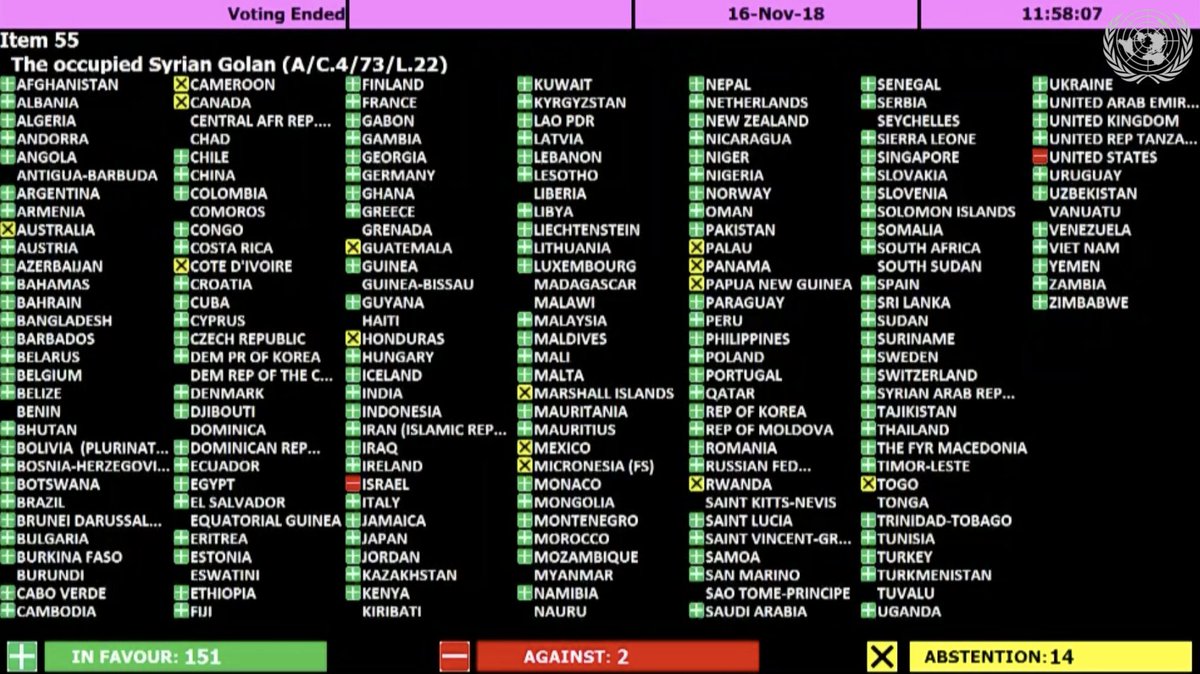
The resolution titled "The occupied Syrian Golan," which condemns Israel for "repressive measures" against Syrian citizens in the Golan Heights, was adopted by a vote of 151 - 2 - 14.
Israel and the U.S. voted 'No' https://t.co/HoO7oz0dwr
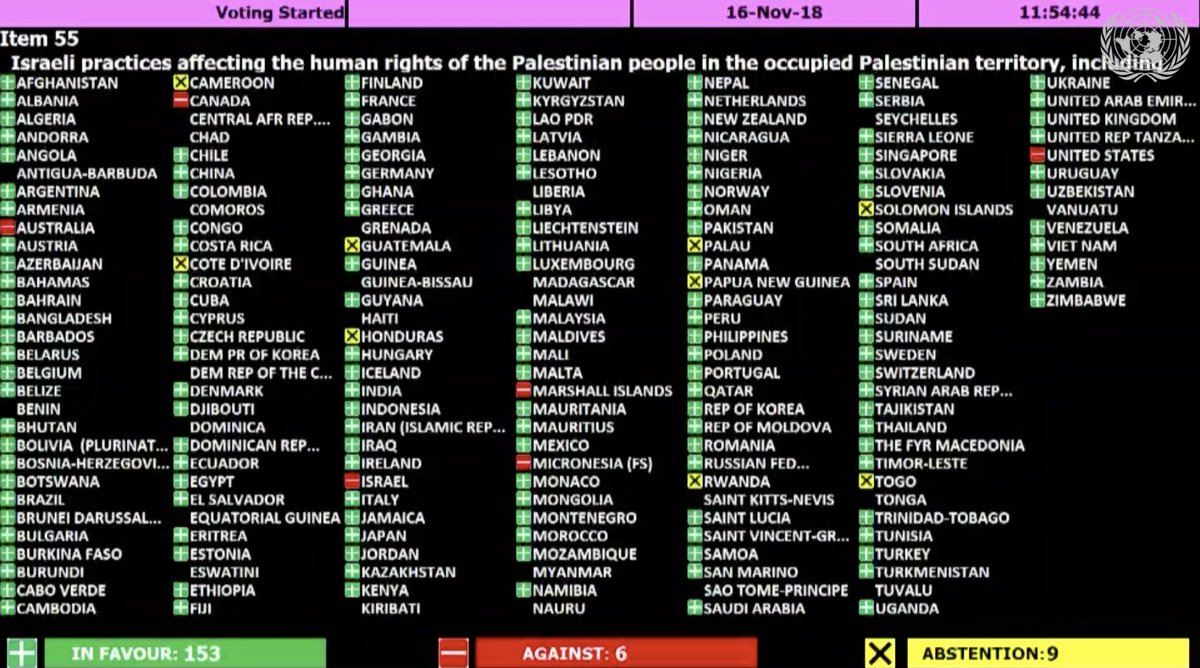
The resolution titled "Israeli practices affecting the human rights of the Palestinian people..." was adopted by a vote of 153 - 6 - 9.
Australia, Canada, Israel, Marshall Islands, Micronesia, and the U.S. voted 'No' https://t.co/1Ntpi7Vqab
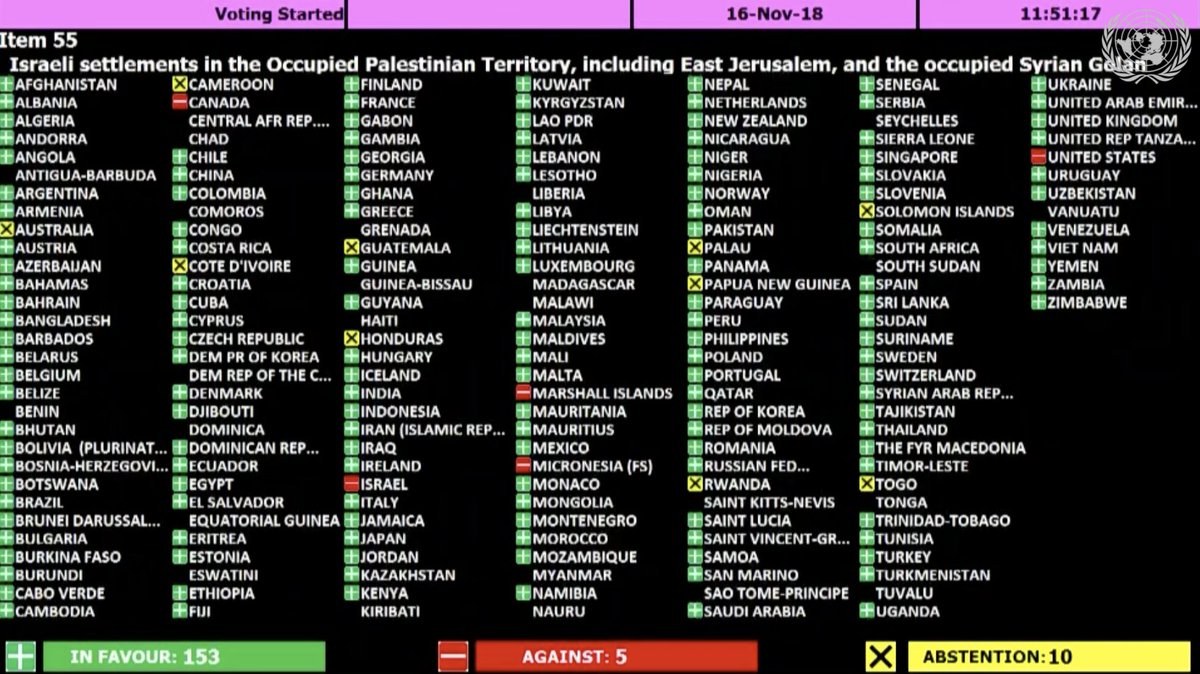
The resolution titled "Israeli settlements in the Occupied Palestinian Territory, including East Jerusalem, and the occupied Syrian Golan" was adopted by a vote of 153 – 5 – 10.
Canada, Israel, Marshall Islands, Micronesia, and the U.S. voted 'No'
https://t.co/REumYgyRuF
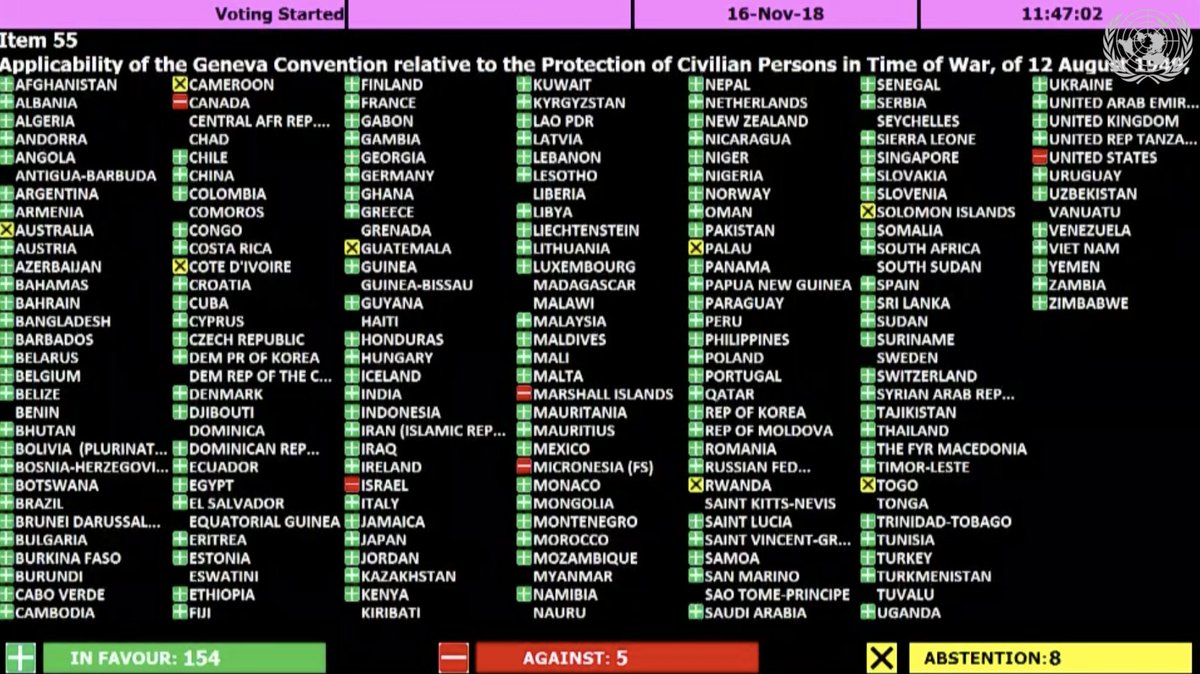
The resolution titled "Applicability of the Geneva Convention... to the
Occupied Palestinian Territory..." was adopted by a vote of 154 - 5 - 8.
Canada, Israel, Marshall Islands, Micronesia, and the U.S. voted 'No'
https://t.co/xDAeS9K1kW
View the resolutions and voting results here:
The resolution titled "The occupied Syrian Golan," which condemns Israel for "repressive measures" against Syrian citizens in the Golan Heights, was adopted by a vote of 151 - 2 - 14.
Israel and the U.S. voted 'No' https://t.co/HoO7oz0dwr
The resolution titled "Israeli practices affecting the human rights of the Palestinian people..." was adopted by a vote of 153 - 6 - 9.
Australia, Canada, Israel, Marshall Islands, Micronesia, and the U.S. voted 'No' https://t.co/1Ntpi7Vqab
The resolution titled "Israeli settlements in the Occupied Palestinian Territory, including East Jerusalem, and the occupied Syrian Golan" was adopted by a vote of 153 – 5 – 10.
Canada, Israel, Marshall Islands, Micronesia, and the U.S. voted 'No'
https://t.co/REumYgyRuF
The resolution titled "Applicability of the Geneva Convention... to the
Occupied Palestinian Territory..." was adopted by a vote of 154 - 5 - 8.
Canada, Israel, Marshall Islands, Micronesia, and the U.S. voted 'No'
https://t.co/xDAeS9K1kW

