
Billionaires see fortunes rise by 27% during the pandemic.
Well would ya look at that.
While the world's been hiding, going broke, losing their homes and businesses, being corralled and penned like little sheep, the
More from Economy


In this paper, we study vote choices of voters who are left-wing on economic issues and authoritarian/nationalist on cultural issues, especially immigration. For these voters, there is no often party combining positions in this way.
In the data from the Campaign Panel of the German Election Study 2017, many voters prefer higher social benefits and taxes and want to restrict immigration. @ches_data show that no party bundles issue positions in this way.
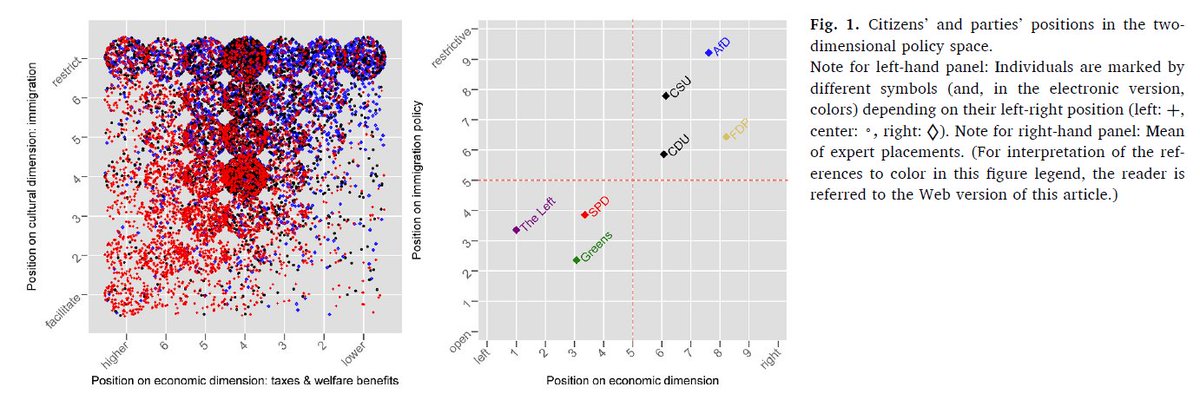
In the article, we show that many such “left-authoritarians” perceive the party they voted for to also hold a left-authoritarian position. Interestingly, this includes many AfD voters who report a perceived left-wing economic position of the party.
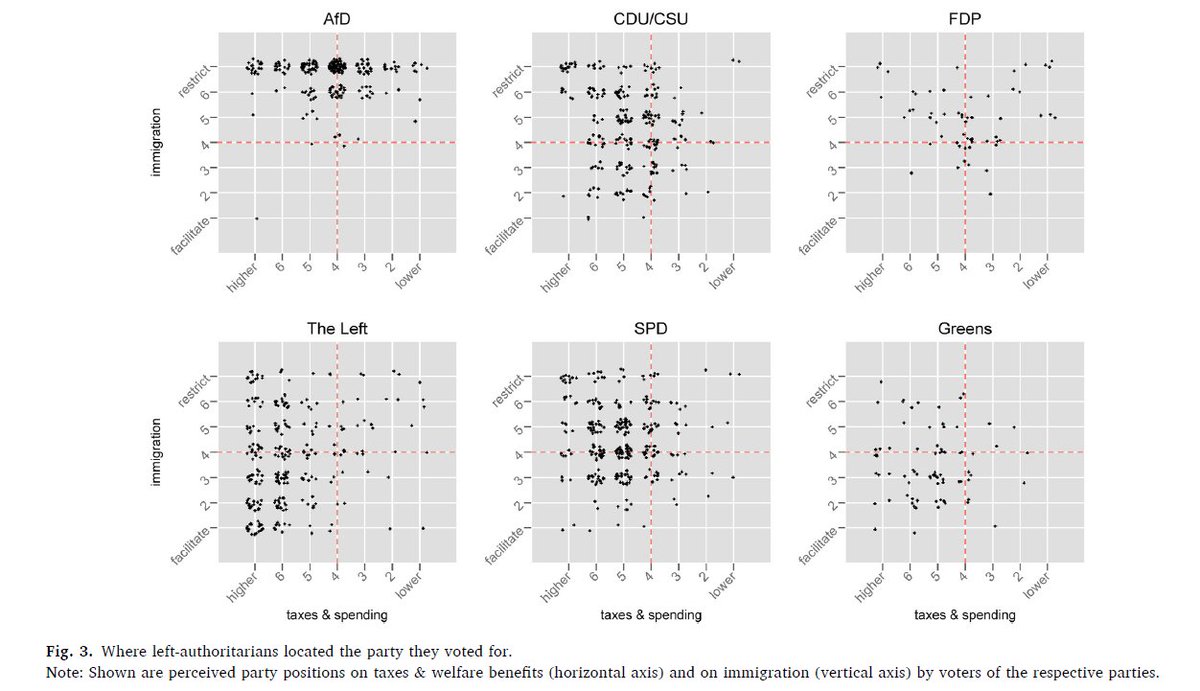
Our statistical models study the interplay between this (mis-)perceived congruence and issue importance, using an open-ended question on the most important political problem in Germany.
We find that (mis-)perceived congruence and issue importance interactively shape the left-authoritarian vote. Simply, perceived congruence matters more on an important issue—and issue salience matters most if voters accurately perceive incongruent party supply.
Vol 70 Apr | '#Vote choices of left-#authoritarians: Misperceived congruence and issue #salience' by @NilsSteiner and Sven Hillen is now available @ches_data @german_gles #Germany https://t.co/pmCoP5t7CL pic.twitter.com/Vl8rCahcZL
— Electoral Studies (@ElectoralStdies) January 30, 2021
In the data from the Campaign Panel of the German Election Study 2017, many voters prefer higher social benefits and taxes and want to restrict immigration. @ches_data show that no party bundles issue positions in this way.
In the article, we show that many such “left-authoritarians” perceive the party they voted for to also hold a left-authoritarian position. Interestingly, this includes many AfD voters who report a perceived left-wing economic position of the party.
Our statistical models study the interplay between this (mis-)perceived congruence and issue importance, using an open-ended question on the most important political problem in Germany.
We find that (mis-)perceived congruence and issue importance interactively shape the left-authoritarian vote. Simply, perceived congruence matters more on an important issue—and issue salience matters most if voters accurately perceive incongruent party supply.
Long rant: This @WSJ article bemoaning the decline of price theory is really worth highlighting. The economic theories and so called "laws of economics" that the WSJ consistently and religiously defends, are the source of their authority, power and privilege.
So called economic "theories" like "you get paid exactly what you are worth" and "markets are perfectly efficient" and "when wages rise, jobs fall" and "raising taxes on the rich kills jobs and growth" and "increasing justice decreases economic efficiency" and...
"Government intervention in markets always creates more harm than good" and "any regulation that constrains corporations kills growth and productivity", etc etc are effectively a protection racket for the rich. It is a set of internally consistent and mathematized conjectures...
That are all demonstrably nonsense. But getting people to accept these "theories" as laws of nature and immutable, timeless truths is the most effective way our current economic elites have found to maintain and enhance the status of the powerful and persuade the weak and poor...
to shut the fuck up and accept their lot in life. Now, FINALLY, some economists- are actually beginning to look at the real world evidence to determine whether these propositions actually describe anything real here on planet earth. Let me save you some time. The answer is NO.
Hilarious. The WSJ editorial page bemoans the waning influence of The neoliberal priesthood, and hence their own. https://t.co/pQT8Dstg8I
— Nick Hanauer (@NickHanauer) January 28, 2021
So called economic "theories" like "you get paid exactly what you are worth" and "markets are perfectly efficient" and "when wages rise, jobs fall" and "raising taxes on the rich kills jobs and growth" and "increasing justice decreases economic efficiency" and...
"Government intervention in markets always creates more harm than good" and "any regulation that constrains corporations kills growth and productivity", etc etc are effectively a protection racket for the rich. It is a set of internally consistent and mathematized conjectures...
That are all demonstrably nonsense. But getting people to accept these "theories" as laws of nature and immutable, timeless truths is the most effective way our current economic elites have found to maintain and enhance the status of the powerful and persuade the weak and poor...
to shut the fuck up and accept their lot in life. Now, FINALLY, some economists- are actually beginning to look at the real world evidence to determine whether these propositions actually describe anything real here on planet earth. Let me save you some time. The answer is NO.
You May Also Like








THREAD: 12 Things Everyone Should Know About IQ
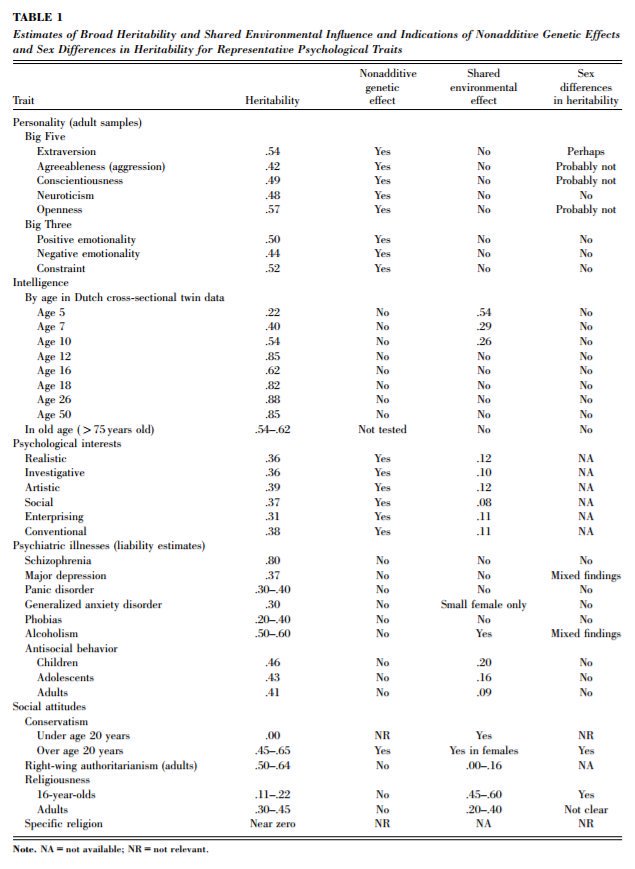
1. IQ is one of the most heritable psychological traits – that is, individual differences in IQ are strongly associated with individual differences in genes (at least in fairly typical modern environments). https://t.co/3XxzW9bxLE
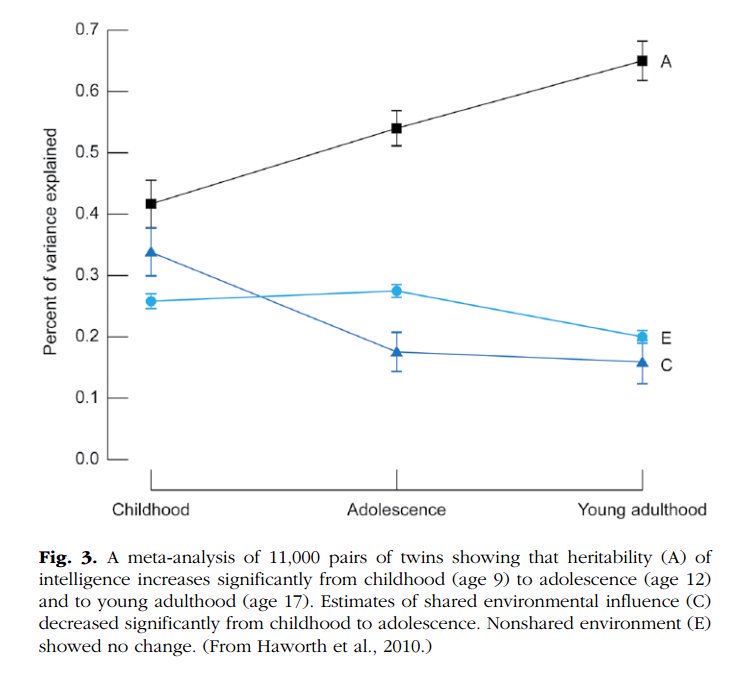
2. The heritability of IQ *increases* from childhood to adulthood. Meanwhile, the effect of the shared environment largely fades away. In other words, when it comes to IQ, nature becomes more important as we get older, nurture less. https://t.co/UqtS1lpw3n
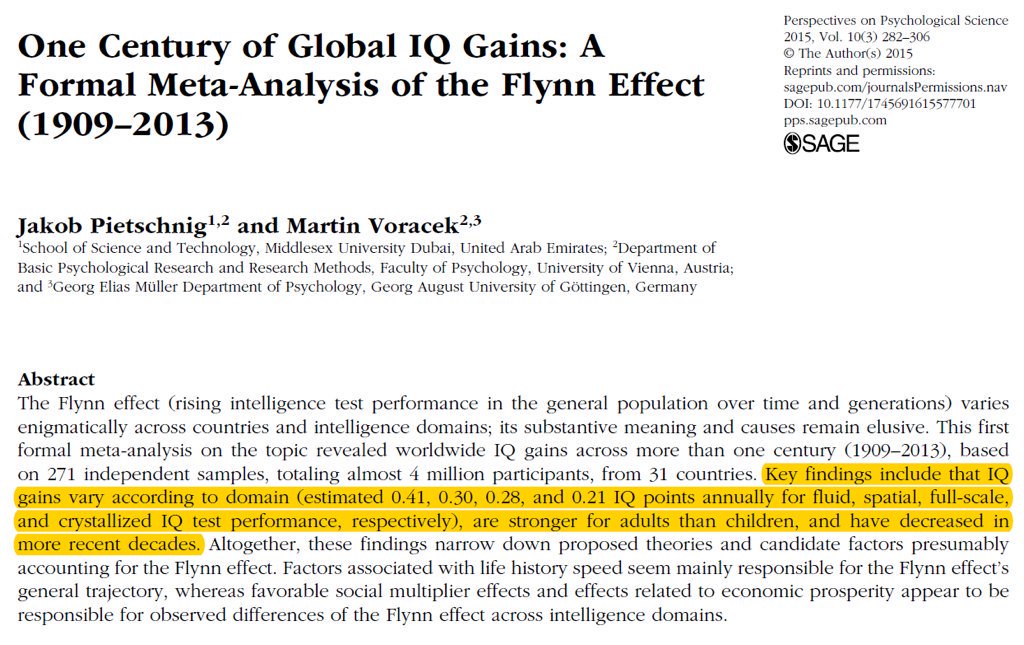
3. IQ scores have been increasing for the last century or so, a phenomenon known as the Flynn effect. https://t.co/sCZvCst3hw (N ≈ 4 million)
(Note that the Flynn effect shows that IQ isn't 100% genetic; it doesn't show that it's 100% environmental.)
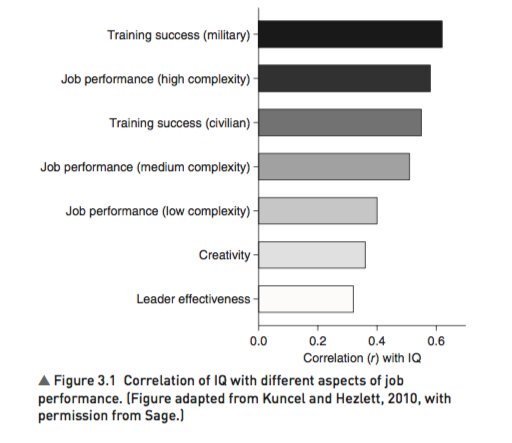
4. IQ predicts many important real world outcomes.
For example, though far from perfect, IQ is the single-best predictor of job performance we have – much better than Emotional Intelligence, the Big Five, Grit, etc. https://t.co/rKUgKDAAVx https://t.co/DWbVI8QSU3
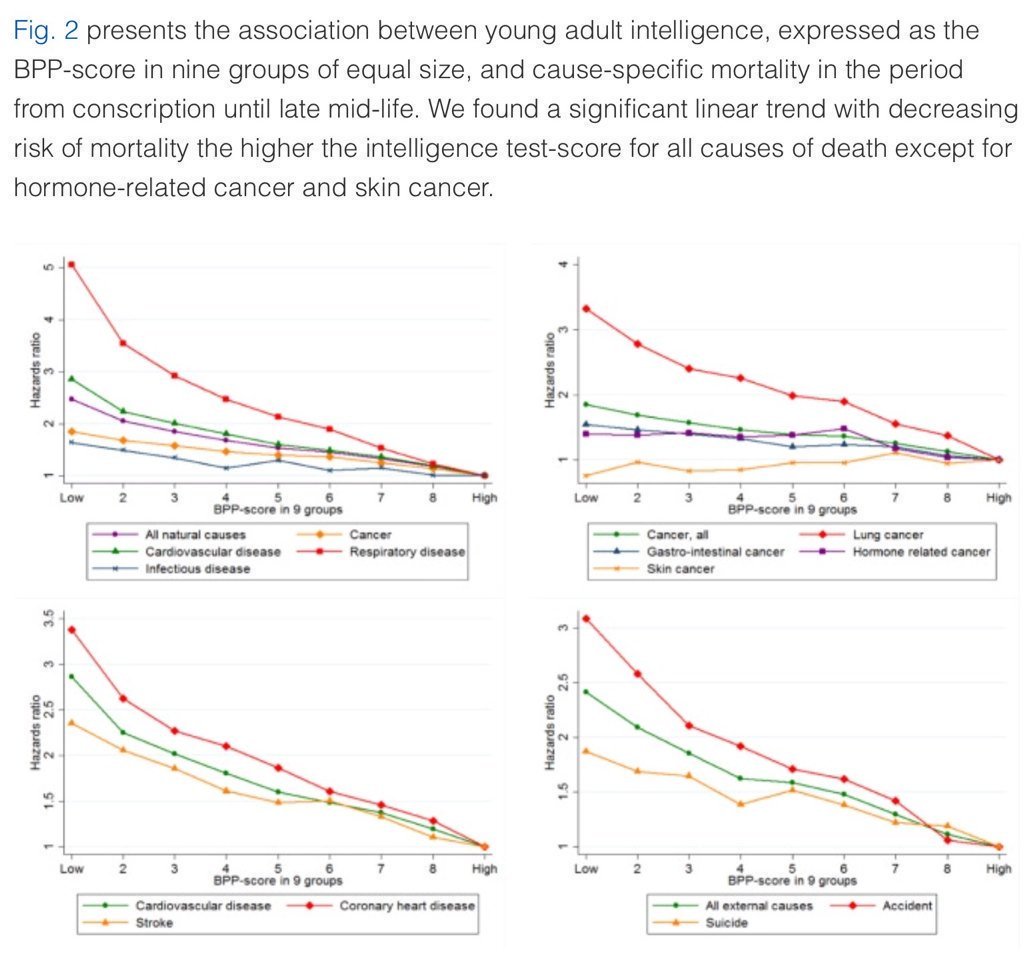
5. Higher IQ is associated with a lower risk of death from most causes, including cardiovascular disease, respiratory disease, most forms of cancer, homicide, suicide, and accident. https://t.co/PJjGNyeQRA (N = 728,160)
1. IQ is one of the most heritable psychological traits – that is, individual differences in IQ are strongly associated with individual differences in genes (at least in fairly typical modern environments). https://t.co/3XxzW9bxLE
2. The heritability of IQ *increases* from childhood to adulthood. Meanwhile, the effect of the shared environment largely fades away. In other words, when it comes to IQ, nature becomes more important as we get older, nurture less. https://t.co/UqtS1lpw3n
3. IQ scores have been increasing for the last century or so, a phenomenon known as the Flynn effect. https://t.co/sCZvCst3hw (N ≈ 4 million)
(Note that the Flynn effect shows that IQ isn't 100% genetic; it doesn't show that it's 100% environmental.)
4. IQ predicts many important real world outcomes.
For example, though far from perfect, IQ is the single-best predictor of job performance we have – much better than Emotional Intelligence, the Big Five, Grit, etc. https://t.co/rKUgKDAAVx https://t.co/DWbVI8QSU3
5. Higher IQ is associated with a lower risk of death from most causes, including cardiovascular disease, respiratory disease, most forms of cancer, homicide, suicide, and accident. https://t.co/PJjGNyeQRA (N = 728,160)


✨📱 iOS 12.1 📱✨
🗓 Release date: October 30, 2018
📝 New Emojis: 158
https://t.co/bx8XjhiCiB
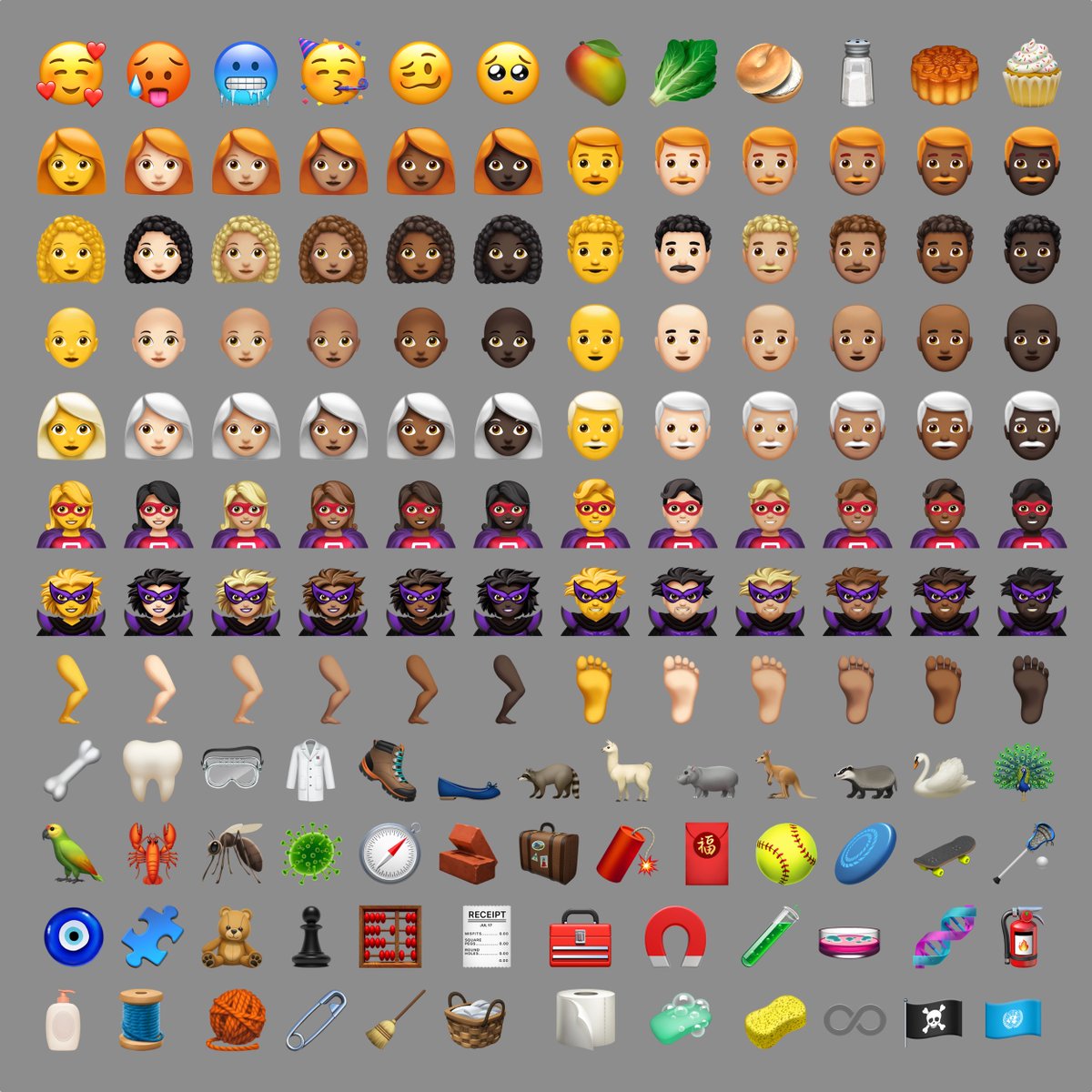
New in iOS 12.1: 🥰 Smiling Face With 3 Hearts https://t.co/6eajdvueip

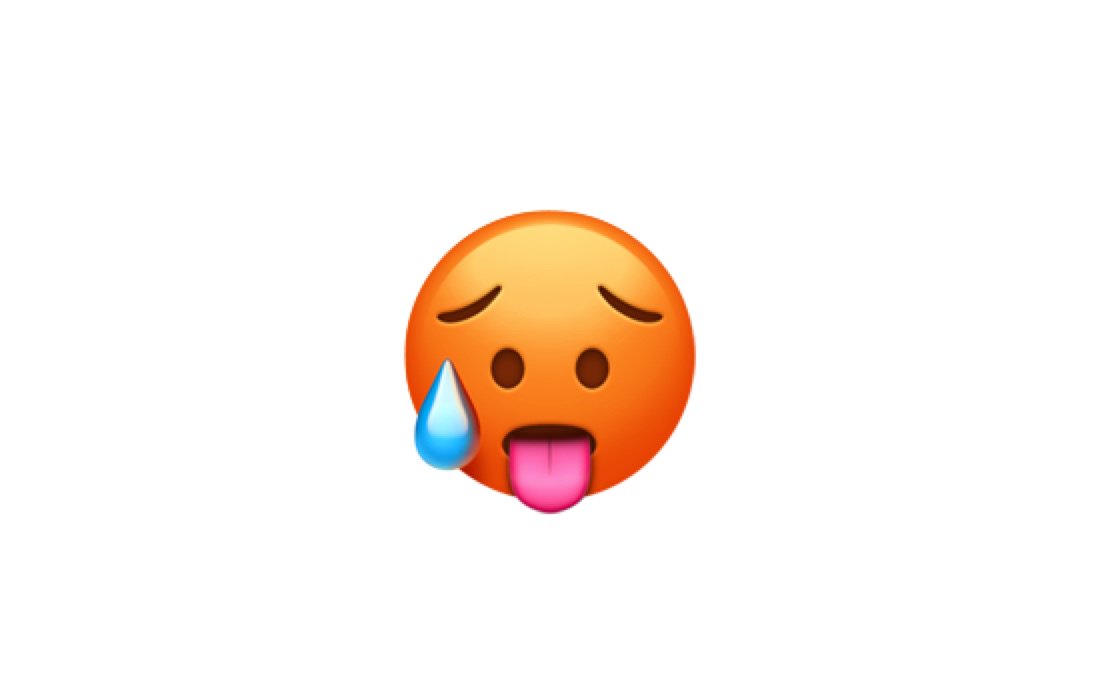
New in iOS 12.1: 🥵 Hot Face https://t.co/jhTv1elltB
New in iOS 12.1: 🥶 Cold Face https://t.co/EIjyl6yZrF

New in iOS 12.1: 🥳 Partying Face https://t.co/p8FDNEQ3LJ

🗓 Release date: October 30, 2018
📝 New Emojis: 158
https://t.co/bx8XjhiCiB
New in iOS 12.1: 🥰 Smiling Face With 3 Hearts https://t.co/6eajdvueip
New in iOS 12.1: 🥵 Hot Face https://t.co/jhTv1elltB
New in iOS 12.1: 🥶 Cold Face https://t.co/EIjyl6yZrF
New in iOS 12.1: 🥳 Partying Face https://t.co/p8FDNEQ3LJ