1/ Wrote an article here about an exchanger that allows you to swap several different cryptocurrencies for Monero without KYC or logins at all

2/ Being the eternal skeptic, wanted to test if this website was actually legitimate (there are a lot of crypto scams out there; way too many)..

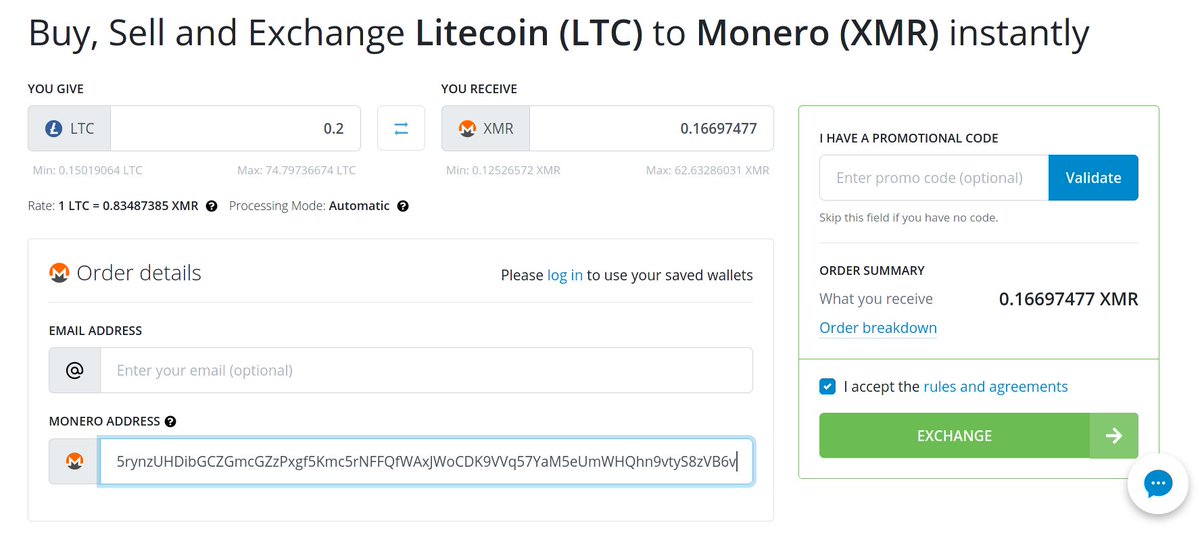
So we start off visiting the main website and set up a LTC:XMR conversion.
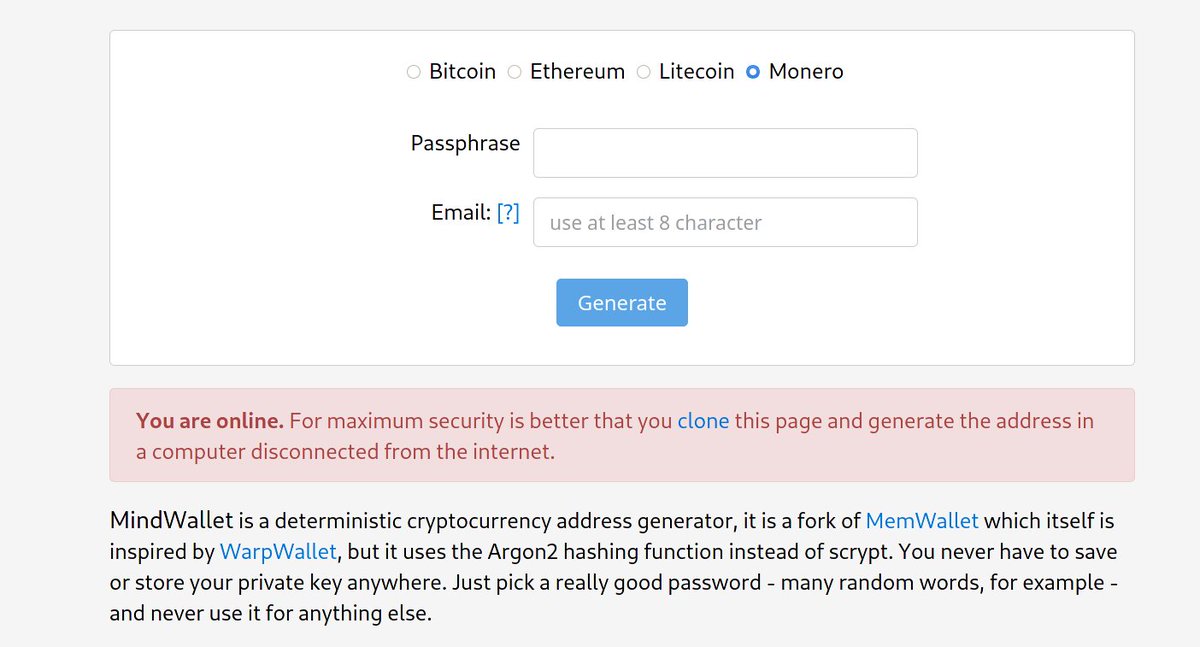
3/ The Monero address that you see in the picture above was created using this "mindwallet" altered tool created by Pactito (https://t.co/KArylCXgWR)
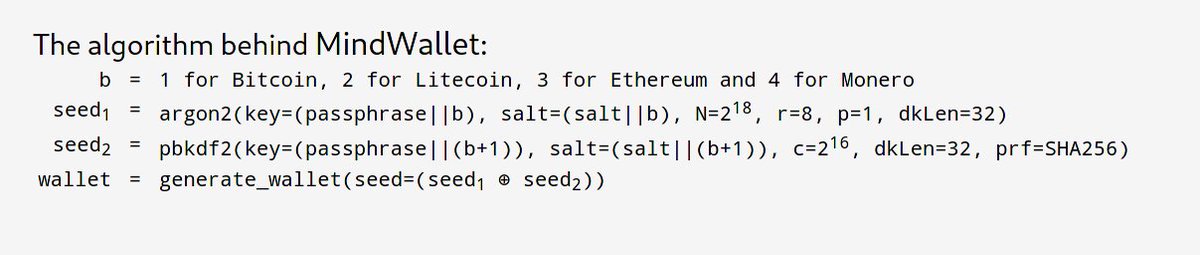
3a/ Wouldn't recommend creating a Monero wallet this way, specifically, but this tool generates addresses deterministically with Argon2 as its KDF using BIP32 + BIP38
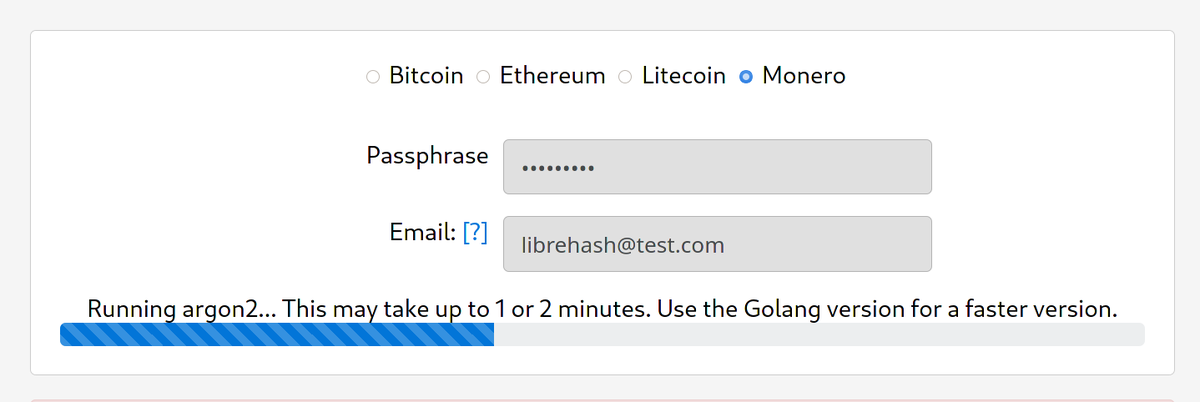
3b/ You can try it yourself. Password for this wallet = librehash

E-mail (salt) = [email protected]

You'll generate the exact same addresses and keys as you see here.

Benefit = in theory, you never need to have your private key stored anywhere, ever.
3c/ If you're wondering if this is legit or not, check out the @KeybaseIO implementation at https://t.co/sUJpIZEWAf ; as you can see, a simple 8-character alphanumeric password with 20+ btc in it has yet to be solved 3-4 years later (salt already given)
4/ Back to the site, we tested out a simple $LTC #Litecoin to $XMR #Monero transfer
5/ Elected to send about $20 worth of $LTC at the time. Enough of an amount to where it felt like a legitimate test. The 6 confirmation wait screen is pretty standard. Cool.
6/ Once that was finished, we were given this screen.

$XMR Monero is diff from other cryptocurrencies (obviously). We need to visit the transaction link.

https://t.co/MTck2Nsxdp
7/ The link from above takes us here. Notice the two stealth addresses with question marks for 'amount'.

If we want to see ours, we need to use our reg. $XMR addy + priv. view key.
8/ Upon doing so, we can see that the correct output has been matched. Cross referencing it with what the site told us (and what we agreed to), we can see that the values match.

So this gets the stamp of approval right now.

More from Culture

One of the authors of the Policy Exchange report on academic free speech thinks it is "ridiculous" to expect him to accurately portray an incident at Cardiff University in his study, both in the reporting and in a question put to a student sample.


Here is the incident Kaufmann incorporated into his study, as told by a Cardiff professor who was there. As you can see, the incident involved the university intervening to *uphold* free speech principles:


Here is the first mention of the Greer at Cardiff incident in Kaufmann's report. It refers to the "concrete case" of the "no-platforming of Germaine Greer". Any reasonable reader would assume that refers to an incident of no-platforming instead of its opposite.


Here is the next mention of Greer in the report. The text asks whether the University "should have overruled protestors" and "stepped in...and guaranteed Greer the right to speak". Again the strong implication is that this did not happen and Greer was "no platformed".


The authors could easily have added a footnote at this point explaining what actually happened in Cardiff. They did not.

You May Also Like

I just finished Eric Adler's The Battle of the Classics, and wanted to say something about Joel Christiansen's review linked below. I am not sure what motivates the review (I speculate a bit below), but it gives a very misleading impression of the book. 1/x


The meat of the criticism is that the history Adler gives is insufficiently critical. Adler describes a few figures who had a great influence on how the modern US university was formed. It's certainly critical: it focuses on the social Darwinism of these figures. 2/x

Other insinuations and suggestions in the review seem wildly off the mark, distorted, or inappropriate-- for example, that the book is clickbaity (it is scholarly) or conservative (hardly) or connected to the events at the Capitol (give me a break). 3/x

The core question: in what sense is classics inherently racist? Classics is old. On Adler's account, it begins in ancient Rome and is revived in the Renaissance. Slavery (Christiansen's primary concern) is also very old. Let's say classics is an education for slaveowners. 4/x

It's worth remembering that literacy itself is elite throughout most of this history. Literacy is, then, also the education of slaveowners. We can honor oral and musical traditions without denying that literacy is, generally, good. 5/x