FROM ZERO TO 250K DOLLARS: insights on successful prop firm trading from @paladinbhutia latest interview.
What I learnt and what you can apply no matter your style of trading.
🧵Thread
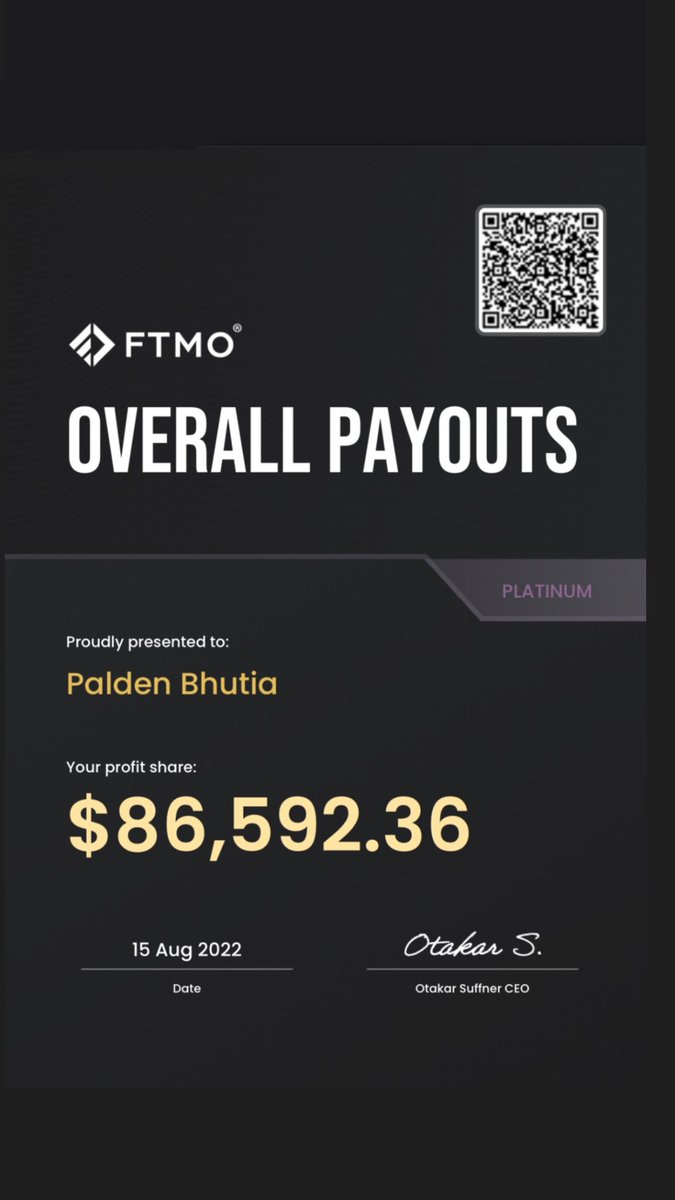
Trading is about having an edge,having the right risk management mindset and having enough capital to trade.
Flipping accounts is a high risk high reward technique. It's the same thing as gambling.
3. He talked about changing is mindset. "Isolate to elevate"
while I don't totally agree with this quote. I believe what's very important is keeping only friends that are traders also and understand what you do.
Paladin talked about how he was constantly on the charts learning and improving is skill set. Instead if going out partying and chasing girls.
Paladin system is a very simple system, he risks 0.5% to 1% targeting like 1-2 risk reward ratio.
. In my own personal journey into trading I always wanted to make big money all trades. I'll end up giving back All my profits to the market
Back to paladin
Maximum 2 losses in a day,maximum 4 losses in a week.
Once we take two looses, we tend to want to revenge this loses and make the money back. I personally have fell for this trap. Close your computer after two looses in a day.
6. Your goal is to survive before you thrive:
In an industry where 90% of people fail.
Once you've made some money from tht investment then you can up your risk.
With a 1-2 risk reward. He his able to get out of a loosing streak fast.
I'll personally incorporate this in my trading and give feedbacks
When you make your analysis it is more likely to catch a part of the move than the entire move. It increases your accuracy.
As long as you're catching it consistently you'll be fine
eurusd
Gbpusd
Gbpjpy
Most successful prop traders have seen, limit the number of pairs they look at.
@paladinbhutia win rate is btw 50 to 70% depending on the market conditions.
Paladin talked about how he only takes between 3 to 6 setups in a week.
Sitting on your hands in trading is magical. I'll ask you to try
More from All




You May Also Like



1/ Some initial thoughts on personal moats:
Like company moats, your personal moat should be a competitive advantage that is not only durable—it should also compound over time.
Characteristics of a personal moat below:
2/ Like a company moat, you want to build career capital while you sleep.
As Andrew Chen noted:
3/ You don’t want to build a competitive advantage that is fleeting or that will get commoditized
Things that might get commoditized over time (some longer than
4/ Before the arrival of recorded music, what used to be scarce was the actual music itself — required an in-person artist.
After recorded music, the music itself became abundant and what became scarce was curation, distribution, and self space.
5/ Similarly, in careers, what used to be (more) scarce were things like ideas, money, and exclusive relationships.
In the internet economy, what has become scarce are things like specific knowledge, rare & valuable skills, and great reputations.
Like company moats, your personal moat should be a competitive advantage that is not only durable—it should also compound over time.
Characteristics of a personal moat below:
I'm increasingly interested in the idea of "personal moats" in the context of careers.
— Erik Torenberg (@eriktorenberg) November 22, 2018
Moats should be:
- Hard to learn and hard to do (but perhaps easier for you)
- Skills that are rare and valuable
- Legible
- Compounding over time
- Unique to your own talents & interests https://t.co/bB3k1YcH5b
2/ Like a company moat, you want to build career capital while you sleep.
As Andrew Chen noted:
People talk about \u201cpassive income\u201d a lot but not about \u201cpassive social capital\u201d or \u201cpassive networking\u201d or \u201cpassive knowledge gaining\u201d but that\u2019s what you can architect if you have a thing and it grows over time without intensive constant effort to sustain it
— Andrew Chen (@andrewchen) November 22, 2018
3/ You don’t want to build a competitive advantage that is fleeting or that will get commoditized
Things that might get commoditized over time (some longer than
Things that look like moats but likely aren\u2019t or may fade:
— Erik Torenberg (@eriktorenberg) November 22, 2018
- Proprietary networks
- Being something other than one of the best at any tournament style-game
- Many "awards"
- Twitter followers or general reach without "respect"
- Anything that depends on information asymmetry https://t.co/abjxesVIh9
4/ Before the arrival of recorded music, what used to be scarce was the actual music itself — required an in-person artist.
After recorded music, the music itself became abundant and what became scarce was curation, distribution, and self space.
5/ Similarly, in careers, what used to be (more) scarce were things like ideas, money, and exclusive relationships.
In the internet economy, what has become scarce are things like specific knowledge, rare & valuable skills, and great reputations.