When we’re raised in homes that are stressful, chaotic, unpredictable, or emotionally neglectful— we dissociate.

Dissociation is when we’re physically present, but mentally gone. And struggle with having memories.

Here’s why (🧵):

Our core need is to attach to a parent figure. This allows us to survive.

We also have an internal defense system that’s developing in order to keep us safe.

Think of the defense system as an internal alarm signaling danger.
When a parent figure is shaming, abusive, has rage cycles, or is emotionally neglectful— this creates a conflict between our attachment & defense system.

Our nervous system is activated (to fight, flight, freeze or fawn.)
At the same time, our attachment system needs that connection.

Regardless of a parents behavior, we will always seem to be loved, accepted, and chosen by a parent figure.

This creates an internal conflict.
So, our brain copes with this conflict by dissociating.

It’s a brilliant protection mechanism that allows us to: stay emotionally connected to our parent while also shielding (on a surface level) from what we’re experiencing.
This causes an internal separation.

One part of us goes about daily life, interacts with people, & appears present.

Another part (all subconscious) is developmentally traumatized. Emotionally immature. And is deeply mistrusting.
We continue to dissociate into adulthood.

This looks like: chronic day dreaming, “spacing out,” feeling numb, losing chunks of time, or feeling like you’re “above” yourself— not actually in the body.
It’s common for people who’ve dissociated through childhood to lack memories. In my case, I have almost no childhood memories— just scattered “feelings” of what happened.

This isn’t because I had “severe” trauma.
It’s because I had long term emotional disconnection from a parent.

In moments where we feel the original core wound from a parent (in my case like I’m being emotional abandoned)— our defense system can come up to protect us.
When this happens, we regress into childlike behaviors (slamming doors, yelling, stomping around, name calling, giving silent treatment, pretending someone isn’t there.)

It’s healing to understand this isn’t actually you— it’s a PART of you.
This part of you is trying to keep you safe.

It’s stored the traumatic experiences & needs valuation, reassurance, & acceptance.

Not more shaming or rejection.
If you liked this thread, please vote in my polls. This subject was chosen by my Twitter community.

Appreciate you all.

More from All

https://t.co/6cRR2B3jBE
Viruses and other pathogens are often studied as stand-alone entities, despite that, in nature, they mostly live in multispecies associations called biofilms—both externally and within the host.

https://t.co/FBfXhUrH5d


Microorganisms in biofilms are enclosed by an extracellular matrix that confers protection and improves survival. Previous studies have shown that viruses can secondarily colonize preexisting biofilms, and viral biofilms have also been described.


...we raise the perspective that CoVs can persistently infect bats due to their association with biofilm structures. This phenomenon potentially provides an optimal environment for nonpathogenic & well-adapted viruses to interact with the host, as well as for viral recombination.


Biofilms can also enhance virion viability in extracellular environments, such as on fomites and in aquatic sediments, allowing viral persistence and dissemination.

You May Also Like

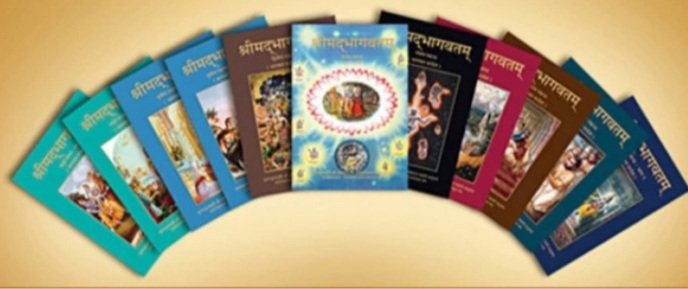
IMPORTANCE, ADVANTAGES AND CHARACTERISTICS OF BHAGWAT PURAN

It was Ved Vyas who edited the eighteen thousand shlokas of Bhagwat. This book destroys all your sins. It has twelve parts which are like kalpvraksh.

In the first skandh, the importance of Vedvyas


and characters of Pandavas are described by the dialogues between Suutji and Shaunakji. Then there is the story of Parikshit.
Next there is a Brahm Narad dialogue describing the avtaar of Bhagwan. Then the characteristics of Puraan are mentioned.

It also discusses the evolution of universe.(
https://t.co/2aK1AZSC79 )

Next is the portrayal of Vidur and his dialogue with Maitreyji. Then there is a mention of Creation of universe by Brahma and the preachings of Sankhya by Kapil Muni.


In the next section we find the portrayal of Sati, Dhruv, Pruthu, and the story of ancient King, Bahirshi.
In the next section we find the character of King Priyavrat and his sons, different types of loks in this universe, and description of Narak. ( https://t.co/gmDTkLktKS )


In the sixth part we find the portrayal of Ajaamil ( https://t.co/LdVSSNspa2 ), Daksh and the birth of Marudgans( https://t.co/tecNidVckj )

In the seventh section we find the story of Prahlad and the description of Varnashram dharma. This section is based on karma vaasna.