Master storytelling and you can print money at will.

Sadly, most people don't know how or where to start.

Here are 5 storytelling frameworks to get you started:

1/ The Pixar Framework

Once upon a time ➔ The story world

Every day ➔ Main character's routine

Then one day ➔ The routine is broken

Because of that ➔ The consequences

Because of that ➔ The journey

Until finally ➔ Main character succeeds or fails
2/ The "What The Hell" Framework

Start in the heat of the action.

Then go back to the beginning.

Breaking Bad does it brilliantly:

It starts with a white, middle-aged man, speeding through the desert in a Winnebago while wearing nothing but his underwear and a gas mask.
3/ The StoryBrand Framework

A Character ➔ Your customer

With a Problem ➔ They need to solve

Meets a Guide ➔ You

Who Gives Them a Plan ➔ Your solution

Calls Them to Action ➔ Use solution

That Ends in Success ➔ Get results
4/ The Innovation Framework

The stage ➔ Current reality
The problem ➔ Outdated solutions
The solution ➔ New product
The proof ➔ Objections tackling
The new world ➔ Life with new product

Here's how Jobs used this framework to introduce the iPhone:
https://t.co/eZjImlTkRK
5/ The Underdog Framework

The disadvantage ➔ Hero is in a rough situation

The strength ➔ Hero accepts the challenge

The challenges ➔ Hero struggles

The turning point ➔ Hero overcomes challenges

The darkest moment ➔ Hero almost goes down

The triumph ➔ Hero wins
Now get writing!

If you found this useful:

1. Follow me @giannicara for more on storytelling
2. RT the tweet below to spread this knowledge:
https://t.co/rkl9xppGnR

More from All

1. Mini Thread on Conflicts of Interest involving the authors of the Nature Toilet Paper:
https://t.co/VUYbsKGncx
Kristian G. Andersen
Andrew Rambaut
Ian Lipkin
Edward C. Holmes
Robert F. Garry

2. Thanks to @newboxer007 for forwarding the link to the research by an Australian in Taiwan (not on

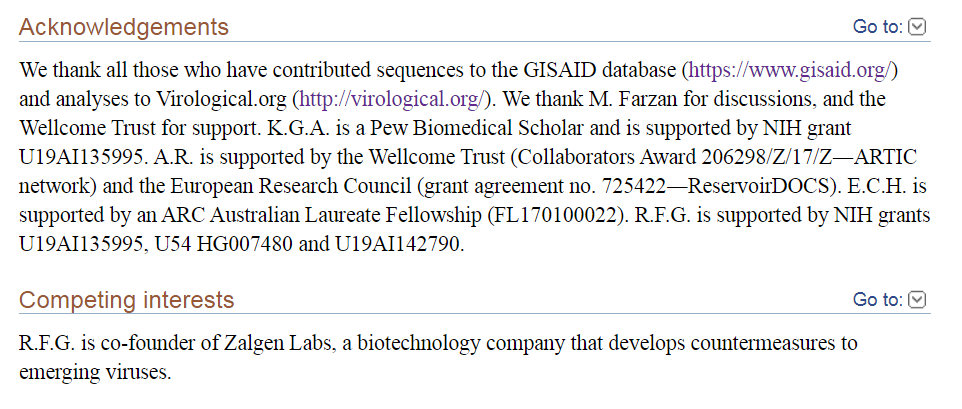
3. K.Andersen didn't mention "competing interests"
Only Garry listed Zalgen Labs, which we will look at later.
In acknowledgements, Michael Farzan, Wellcome Trust, NIH, ERC & ARC are mentioned.
Author affiliations listed as usual.
Note the 328 Citations!
https://t.co/nmOeohM89Q


4. Kristian Andersen (1)
Andersen worked with USAMRIID & Fort Detrick scientists on research, with Robert Garry, Jens Kuhn & Sina Bavari among


5. Kristian Andersen (2)
Works at Scripps Research Institute, which WAS in serious financial trouble, haemorrhaging 20 million $ a year.
But just when the first virus cases were emerging, they received great news.
They issued a press release dated November 27, 2019:

You May Also Like

"I really want to break into Product Management"

make products.

"If only someone would tell me how I can get a startup to notice me."

Make Products.

"I guess it's impossible and I'll never break into the industry."

MAKE PRODUCTS.

Courtesy of @edbrisson's wonderful thread on breaking into comics –
https://t.co/TgNblNSCBj – here is why the same applies to Product Management, too.


There is no better way of learning the craft of product, or proving your potential to employers, than just doing it.

You do not need anybody's permission. We don't have diplomas, nor doctorates. We can barely agree on a single standard of what a Product Manager is supposed to do.

But – there is at least one blindingly obvious industry consensus – a Product Manager makes Products.

And they don't need to be kept at the exact right temperature, given endless resource, or carefully protected in order to do this.

They find their own way.
THREAD: 12 Things Everyone Should Know About IQ

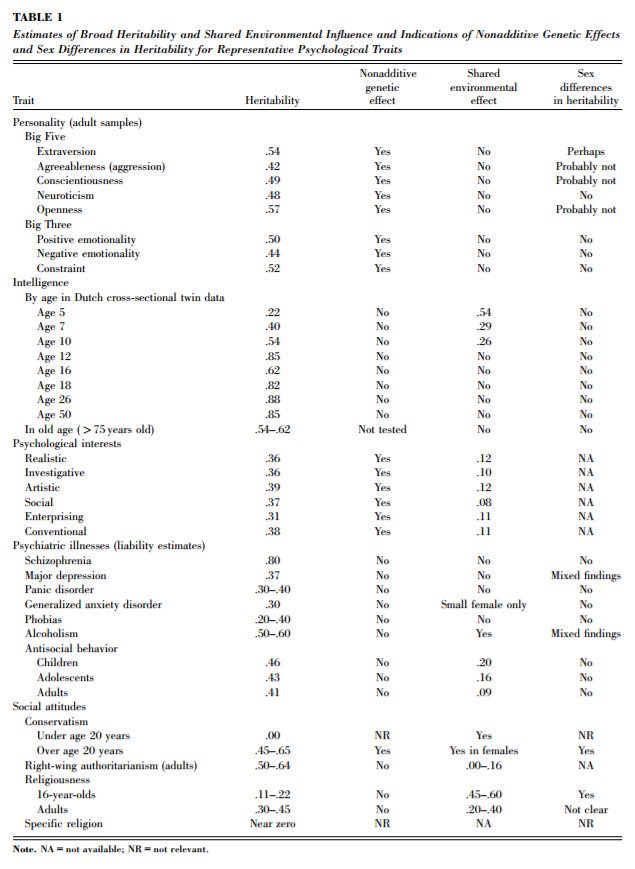
1. IQ is one of the most heritable psychological traits – that is, individual differences in IQ are strongly associated with individual differences in genes (at least in fairly typical modern environments). https://t.co/3XxzW9bxLE


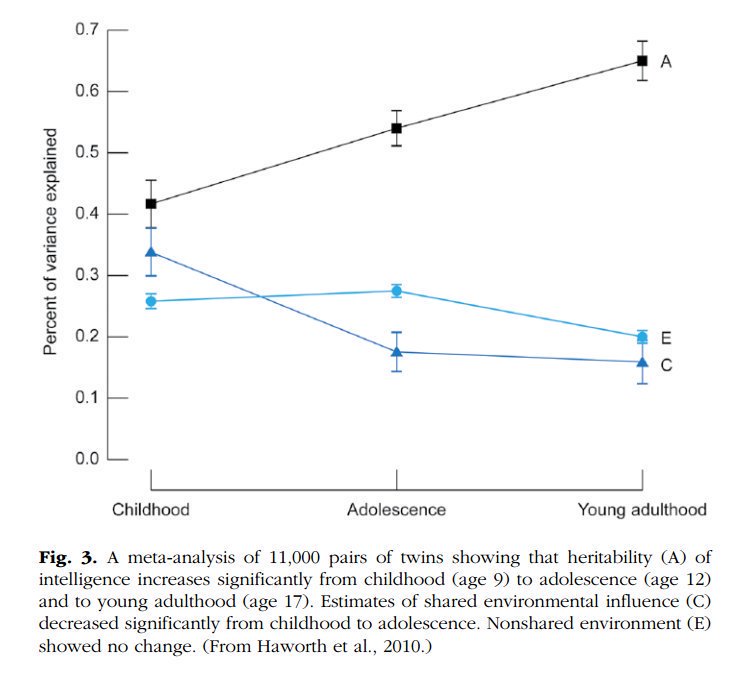
2. The heritability of IQ *increases* from childhood to adulthood. Meanwhile, the effect of the shared environment largely fades away. In other words, when it comes to IQ, nature becomes more important as we get older, nurture less.
https://t.co/UqtS1lpw3n


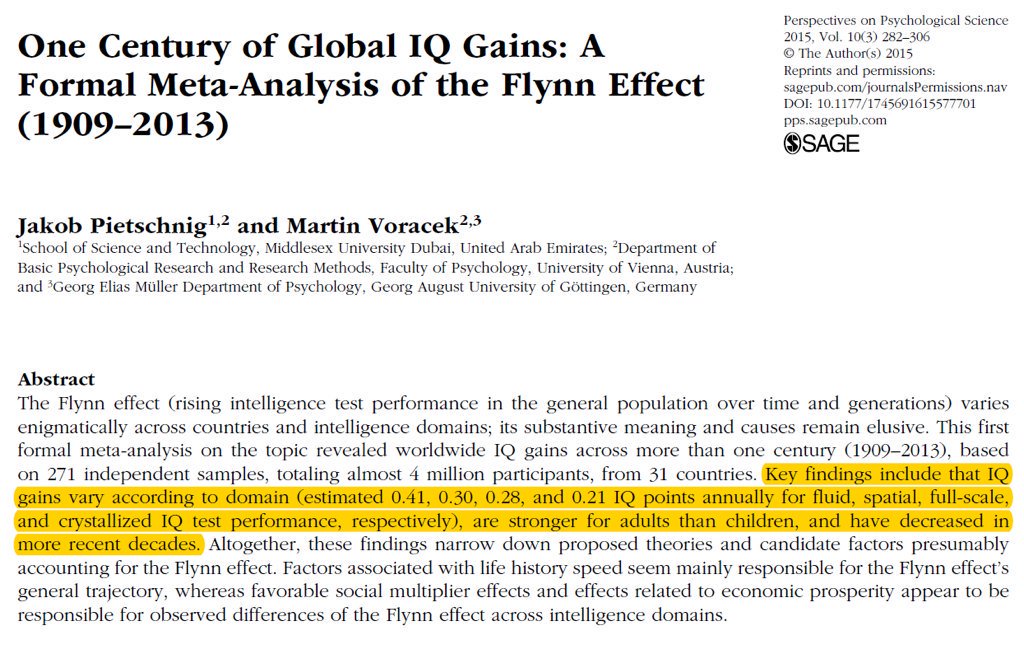
3. IQ scores have been increasing for the last century or so, a phenomenon known as the Flynn effect. https://t.co/sCZvCst3hw (N ≈ 4 million)

(Note that the Flynn effect shows that IQ isn't 100% genetic; it doesn't show that it's 100% environmental.)


4. IQ predicts many important real world outcomes.

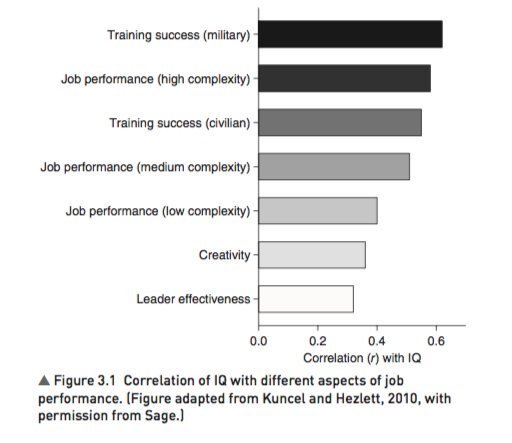
For example, though far from perfect, IQ is the single-best predictor of job performance we have – much better than Emotional Intelligence, the Big Five, Grit, etc. https://t.co/rKUgKDAAVx https://t.co/DWbVI8QSU3


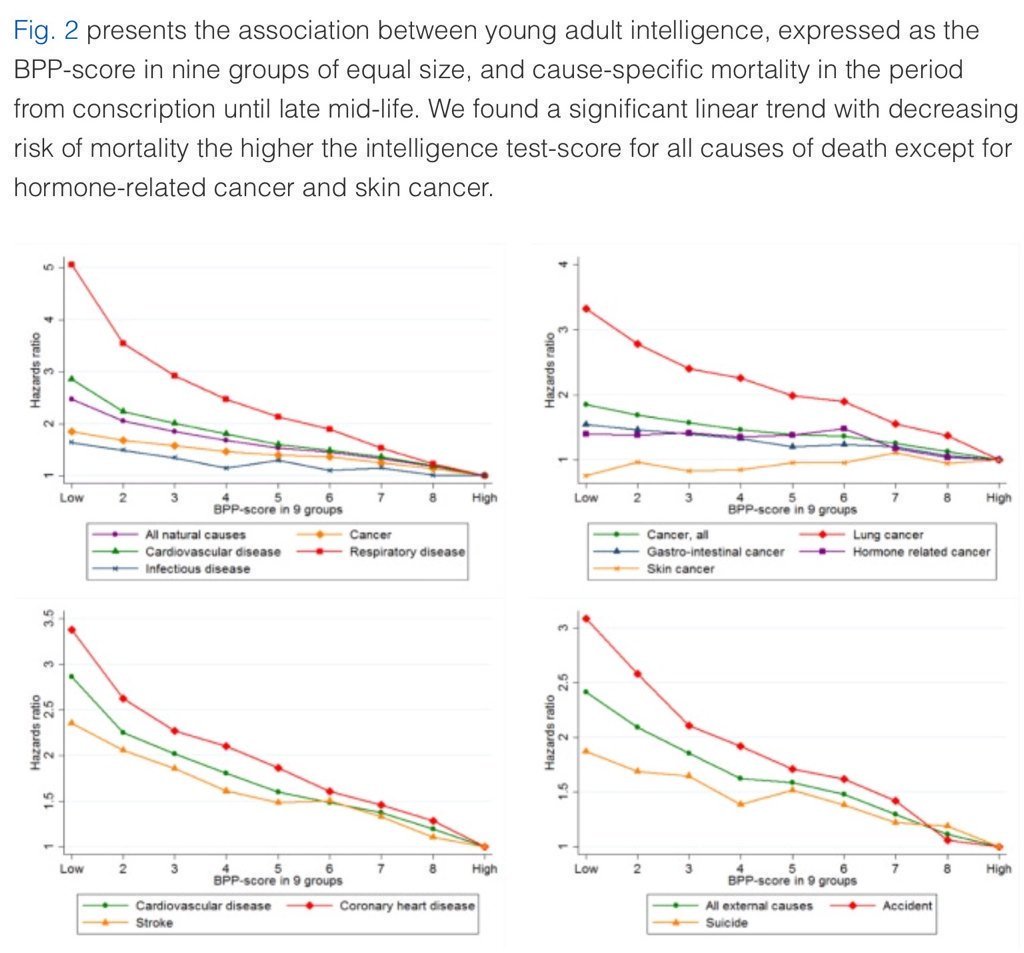
5. Higher IQ is associated with a lower risk of death from most causes, including cardiovascular disease, respiratory disease, most forms of cancer, homicide, suicide, and accident. https://t.co/PJjGNyeQRA (N = 728,160)