A small thread on Mindset of a successful trader. What differentiates best traders from the bad ones? Why 95% of the traders don’t make money? Trading is an unpredictable game, how could one win in that? 1/n

More from Kirubakaran Rajendran
I have been watching movies from a very early age and I just love it. Watching a good movie makes you forget that you are actually watching a movie. Here's a master thread about reviews of all the movies I have shared in twitter so far.Trying to find a weekend movie? Here it is

https://t.co/gjTHTKyyb2
https://t.co/ZCNxllFLB0
https://t.co/uqlAlXdFga
https://t.co/wMf9Q0G6uY
https://t.co/gjTHTKyyb2
It Ain\u2019t What You Don\u2019t Know That Gets You Into Trouble. It\u2019s What You Know for Sure That Just Ain\u2019t So. Watching #TheBigShort
— Kirubakaran Rajendran (@kirubaakaran) March 14, 2020
Perfect movie for this weekend in current market scenario. pic.twitter.com/OuW1ERAztx
https://t.co/ZCNxllFLB0
When U think of Cars, if #FastAndFurious what comes to your mind, then this movie is not for you. Instead if #Rush movie comes to your mind, then definitely #FordVsFerrai is for you. What an amazing movie, Matt & Bale performance was top notch. Must watch movie. pic.twitter.com/KTGAEhLu9V
— Kirubakaran Rajendran (@kirubaakaran) November 19, 2019
https://t.co/uqlAlXdFga
If you haven\u2019t watched this movie, check it out. The China Hustle. Fantastic documentary that covers about how bogus Chinese firms made millions with IPO, how they tackled these satellite tracking. https://t.co/nC3MTxFpZo pic.twitter.com/3iuhFpOA45
— Kirubakaran Rajendran (@kirubaakaran) April 3, 2020
https://t.co/wMf9Q0G6uY
#SooraraiPottru Entrepreneurship is living a few years of your life like most people won\u2019t, so that you can spend the rest of your life like most people can\u2019t.\u201d No business is inferior to one another. Most inspiring Tamil movie in recent times, Vera level \U0001f44c Chancey ila pic.twitter.com/f307TqIE3X
— Kirubakaran Rajendran (@kirubaakaran) November 12, 2020


Here's a detailed analysis of 920 Straddle with 25% SL using @stockmock_in platform. This analysis would show which days are max profitable, how it behaves on gap days and how it behaves on different VIX days. 🧵
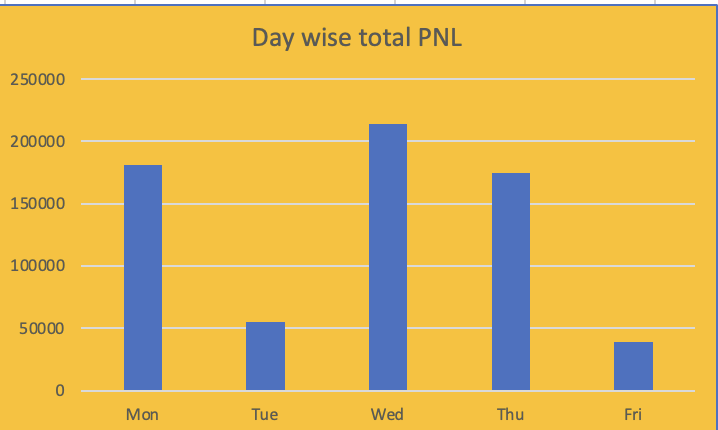
Here's day wise total profits, Wednesday are the days it has generated highest profits compared to all other days and Friday being the least profitable day.
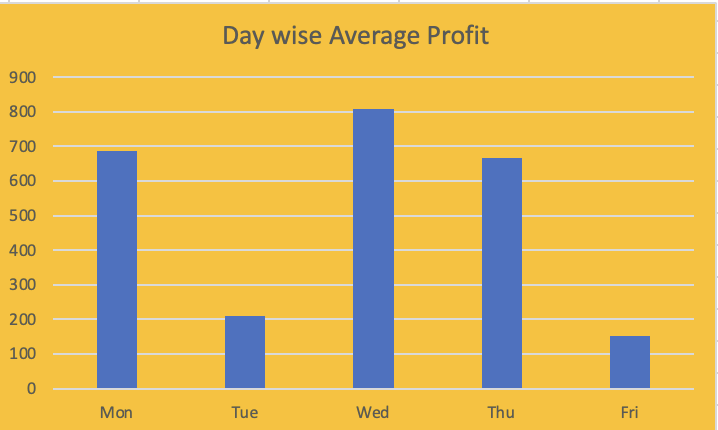
Here's day wise average profits, obviously Wednesday are the days it has generated highest average profits compared to all other days and Friday being the least profitable day.
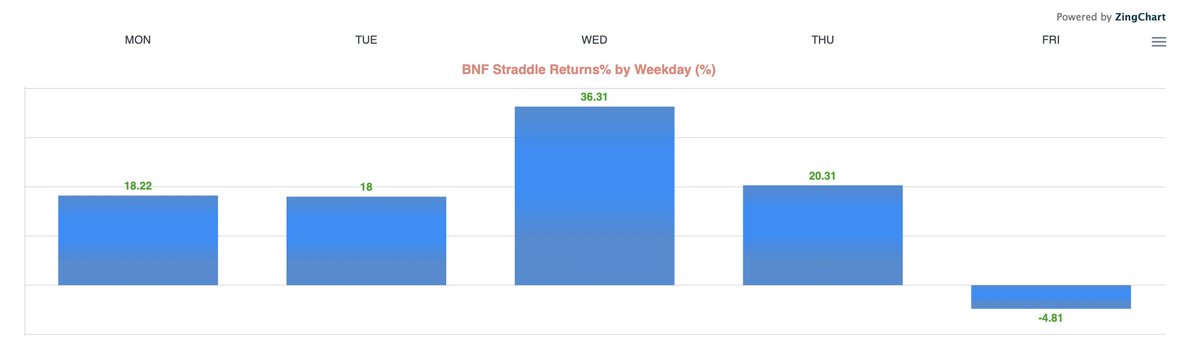
Even the live profits after all charges generated through 920 straddle trading bots at https://t.co/AKj4vqky6X also reflected Fridays are not profitable when you incur all charges. Wednesday being the most profitable day. Live profits are shown here https://t.co/3hgti23lRB
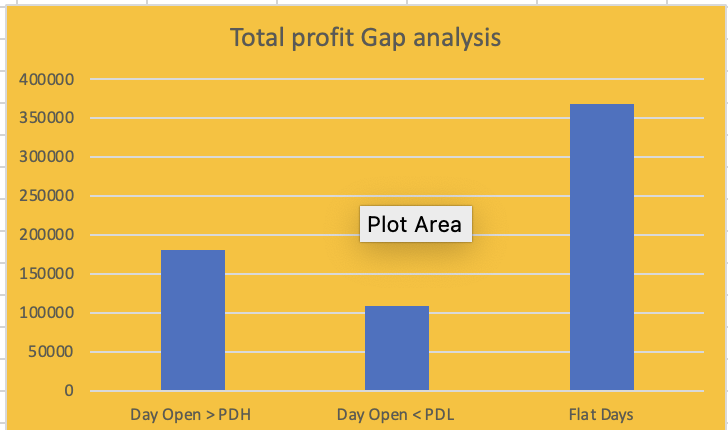
Here's total profits made during gaps, when day open is greater than previous day high, Day open < Prev day low and flat days. Irrespective of gaps, its able to generate profits over all. Even the avg profits denotes the same
Here's day wise total profits, Wednesday are the days it has generated highest profits compared to all other days and Friday being the least profitable day.
Here's day wise average profits, obviously Wednesday are the days it has generated highest average profits compared to all other days and Friday being the least profitable day.
Even the live profits after all charges generated through 920 straddle trading bots at https://t.co/AKj4vqky6X also reflected Fridays are not profitable when you incur all charges. Wednesday being the most profitable day. Live profits are shown here https://t.co/3hgti23lRB
Here's total profits made during gaps, when day open is greater than previous day high, Day open < Prev day low and flat days. Irrespective of gaps, its able to generate profits over all. Even the avg profits denotes the same
More from All












You May Also Like


1/“What would need to be true for you to….X”
Why is this the most powerful question you can ask when attempting to reach an agreement with another human being or organization?
A thread, co-written by @deanmbrody:
2/ First, “X” could be lots of things. Examples: What would need to be true for you to
- “Feel it's in our best interest for me to be CMO"
- “Feel that we’re in a good place as a company”
- “Feel that we’re on the same page”
- “Feel that we both got what we wanted from this deal
3/ Normally, we aren’t that direct. Example from startup/VC land:
Founders leave VC meetings thinking that every VC will invest, but they rarely do.
Worse over, the founders don’t know what they need to do in order to be fundable.
4/ So why should you ask the magic Q?
To get clarity.
You want to know where you stand, and what it takes to get what you want in a way that also gets them what they want.
It also holds them (mentally) accountable once the thing they need becomes true.
5/ Staying in the context of soliciting investors, the question is “what would need to be true for you to want to invest (or partner with us on this journey, etc)?”
Multiple responses to this question are likely to deliver a positive result.
Why is this the most powerful question you can ask when attempting to reach an agreement with another human being or organization?
A thread, co-written by @deanmbrody:
Next level tactic when closing a sale, candidate, or investment:
— Erik Torenberg (@eriktorenberg) February 27, 2018
Ask: \u201cWhat needs to be true for you to be all in?\u201d
You'll usually get an explicit answer that you might not get otherwise. It also holds them accountable once the thing they need becomes true.
2/ First, “X” could be lots of things. Examples: What would need to be true for you to
- “Feel it's in our best interest for me to be CMO"
- “Feel that we’re in a good place as a company”
- “Feel that we’re on the same page”
- “Feel that we both got what we wanted from this deal
3/ Normally, we aren’t that direct. Example from startup/VC land:
Founders leave VC meetings thinking that every VC will invest, but they rarely do.
Worse over, the founders don’t know what they need to do in order to be fundable.
4/ So why should you ask the magic Q?
To get clarity.
You want to know where you stand, and what it takes to get what you want in a way that also gets them what they want.
It also holds them (mentally) accountable once the thing they need becomes true.
5/ Staying in the context of soliciting investors, the question is “what would need to be true for you to want to invest (or partner with us on this journey, etc)?”
Multiple responses to this question are likely to deliver a positive result.