Mollyycolllinss Authors Noahtogolpe 🐇
7 days
30 days
All time
Recent
Popular

1/OK, let's take a little break from Coup Twitter, and think about an economic issue:
How can we build up the wealth of the middle class?
2/The typical American has surprisingly little wealth compared to the typical resident of many other developed countries.
This is a fact that is not widely known or appreciated.
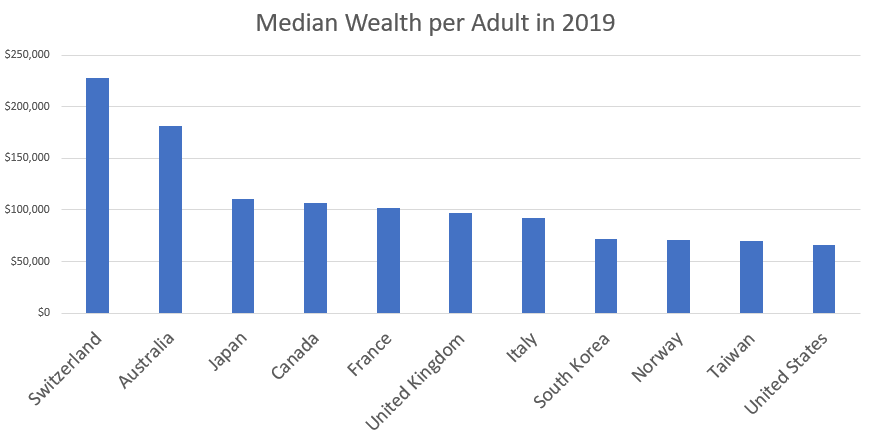
3/Now, some people argue that stuff like Social Security or social insurance programs should be included in wealth. But I chose to focus on private wealth because I think having assets you can sell whenever you want is important to
4/For many decades after World War 2, middle-class wealth in America was on a smooth upward trajectory.
Then the housing crash came, and all that changed. Suddenly the rich were still doing well but everyone else was seeing the end of their American Dream.
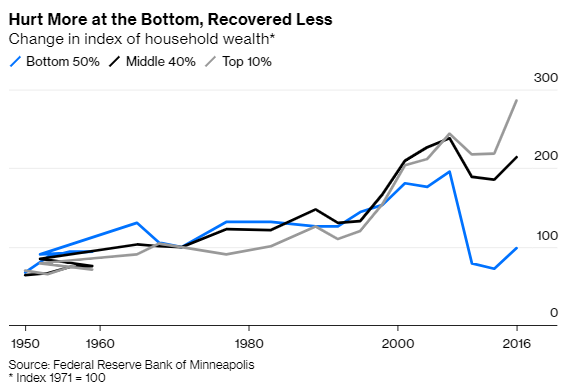
5/Why the divergence?
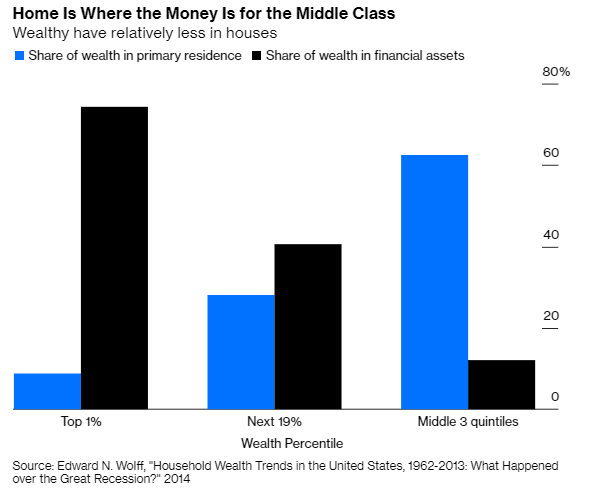
Because the American middle class has its wealth in houses -- specifically, in the houses they live in.
It's the rich who own stocks.
How can we build up the wealth of the middle class?
2/The typical American has surprisingly little wealth compared to the typical resident of many other developed countries.
This is a fact that is not widely known or appreciated.
3/Now, some people argue that stuff like Social Security or social insurance programs should be included in wealth. But I chose to focus on private wealth because I think having assets you can sell whenever you want is important to
Yes, these numbers don't include things like Social Security, just privately held wealth. They're not an attempt to capitalize every possible future income stream.
— Noahtogolpe \U0001f407 (@Noahpinion) January 10, 2021
4/For many decades after World War 2, middle-class wealth in America was on a smooth upward trajectory.
Then the housing crash came, and all that changed. Suddenly the rich were still doing well but everyone else was seeing the end of their American Dream.
5/Why the divergence?
Because the American middle class has its wealth in houses -- specifically, in the houses they live in.
It's the rich who own stocks.
1/OK, so. Let's talk about Left-NIMBYism.
We all know about Right-NIMBYs, rabidly protecting their white-flight suburbs from Those People. And there are plenty of liberal NIMBYs too.
But NIMBYs of the Left are also a force to be reckoned
2/Left-NIMBYs have developed a canon of interlocking, mutually reinforcing beliefs about housing and urbanism.
These beliefs are mostly false, but they form a powerful "canon" that quickly ossifies into a hardened worldview.
It looks something like this:
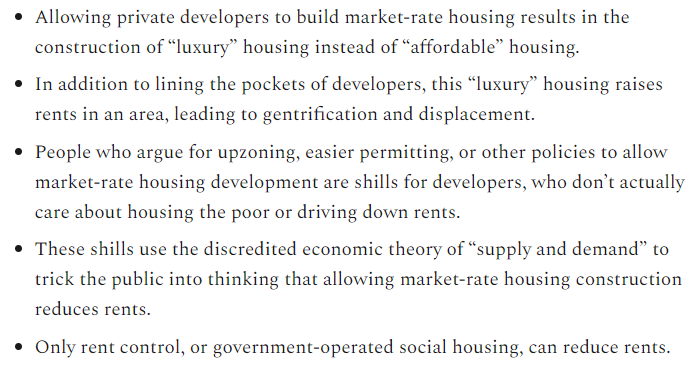
3/Fortunately, Nathan J. Robinson of Current Affairs has written an article that perfectly encapsulates the Left-NIMBY worldview (and quotes me in it!).
So this is a teachable
4/Robinson selectively quotes a Bloomberg article of mine (https://t.co/iamRrW6oei).
Look at the part he quoted, vs. what I actually wrote!
Pretty different, eh? 😉
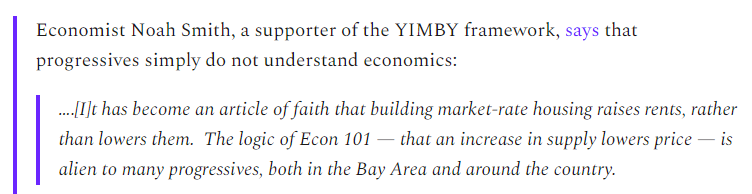
5/In fact, as I wrote in the article that Robinson failed to read more than one line of, it's theoretically possible that Left-NIMBYs COULD be right that allowing market-rate housing drives up local rents.
I take that possibility very seriously, as do YIMBYs.
We all know about Right-NIMBYs, rabidly protecting their white-flight suburbs from Those People. And there are plenty of liberal NIMBYs too.
But NIMBYs of the Left are also a force to be reckoned
2/Left-NIMBYs have developed a canon of interlocking, mutually reinforcing beliefs about housing and urbanism.
These beliefs are mostly false, but they form a powerful "canon" that quickly ossifies into a hardened worldview.
It looks something like this:
3/Fortunately, Nathan J. Robinson of Current Affairs has written an article that perfectly encapsulates the Left-NIMBY worldview (and quotes me in it!).
So this is a teachable
4/Robinson selectively quotes a Bloomberg article of mine (https://t.co/iamRrW6oei).
Look at the part he quoted, vs. what I actually wrote!
Pretty different, eh? 😉
5/In fact, as I wrote in the article that Robinson failed to read more than one line of, it's theoretically possible that Left-NIMBYs COULD be right that allowing market-rate housing drives up local rents.
I take that possibility very seriously, as do YIMBYs.
1/Lots of tech companies and workers are making noises about leaving San Francisco, LA, NYC, and other "superstar" cities.
Some are predicting a shift to remote work and distributed companies.
Let's take a hard look at what that would actually
2/We're all familiar with the trend of tech companies and other knowledge industries (finance, biotech, etc.) piling into a few tech hubs, raising rents and house prices.
Now some think the advent of Zoom, Slack, etc. might reverse this trend.
https://t.co/nQVCJrKvrB
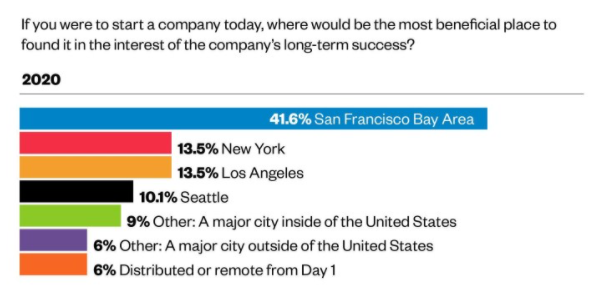
3/But escaping the superstar cities is going to be tough.
The forces keeping tech companies in places like SF are so strong that these regions have essentially become prisons for these companies.
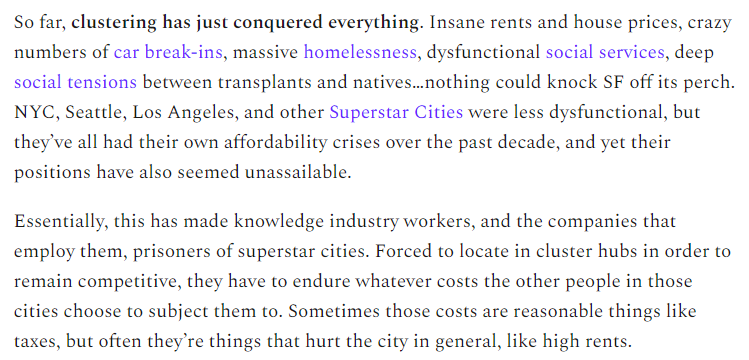
4/In order to escape the prison of the superstar cities, tech companies and other knowledge industries will have to overcome the Four Jailers of Industrial Clustering:
1. In-person office productivity
2. Thick market effects
3. Knowledge spillovers
4. City life amenities
5/I'm actually pretty optimistic that companies can find ways to make remote work productive.
Studies show that working from home *some* of the time actually tends to raise
Some are predicting a shift to remote work and distributed companies.
Let's take a hard look at what that would actually
2/We're all familiar with the trend of tech companies and other knowledge industries (finance, biotech, etc.) piling into a few tech hubs, raising rents and house prices.
Now some think the advent of Zoom, Slack, etc. might reverse this trend.
https://t.co/nQVCJrKvrB
3/But escaping the superstar cities is going to be tough.
The forces keeping tech companies in places like SF are so strong that these regions have essentially become prisons for these companies.
4/In order to escape the prison of the superstar cities, tech companies and other knowledge industries will have to overcome the Four Jailers of Industrial Clustering:
1. In-person office productivity
2. Thick market effects
3. Knowledge spillovers
4. City life amenities
5/I'm actually pretty optimistic that companies can find ways to make remote work productive.
Studies show that working from home *some* of the time actually tends to raise