
I heard a panel recently where half the writers were dropped by their first agent after they pitched their second project. Be sure to ask around outside of the agent on this one.
As we’re heading into the #PitchWars showcase and since the conversation seems abuzz...here’s a thread of questions I would recommend you ask not only potential agents during The Call, but references, and clients you reach out to personally:
I heard a panel recently where half the writers were dropped by their first agent after they pitched their second project. Be sure to ask around outside of the agent on this one.
Meaning, will they revise the manuscript with you beforehand or just do small edits and send it off to editors. Both have their pros and cons, and one might matter to you more.
In other words, how much time do they have to devote to you and your career. You can also ask, on average how long does it take to get a project on sub?
This one I think is rarely in questions lists, but I think it’s a fun one to see how passionate an agent gets about their career.
This one is to see if they are signing and selling projects like yours. If you write sci-fi and all they’ve sold recently are contemporaries in a different age group that’s good to know!
This will allow you to see if they are excited to send to large publishers or are leaning more toward mid-sized, etc. This might matter more to you one or the other way.
If there are things you are not willing to change that the agent mentions, better to have the conversation before. Many agents won’t tell you everything, you can always mentions some things you don’t want to change too.
If this is super important to you, you can definitely ask about money up front and the value they think your project has.
Career building and planning is definitely something that your agent should have some idea on. A lot depends on what happens with project one, etc, but just an overall idea if this is something they do with clients is good!
I’ve found that a lot of my agent sibs and I have a similar commercial style and it makes me feel like I’m in the right coven. Knowing that your writing fits into what your agent likes to read will make you feel confident.
Last year I attended KT’s bi-annual retreat for the first time and got to know some of my amazing agency sibs and my agent. Definitely is a plus!
This is a business and knowing that your agency has access and experience with other avenues that will make your $ is awesome! If they can give you examples of this even better!
Some agents can and some can’t. Some may leave the industry entirely. Important to know what will happen to you if any of this happens.
This might be important to you even if you are not a marginalized writer. Some agents/agencies are sadly are sometimes racist, etc. Good to know beforehand!
At KT, I think it’s one or two years before I could use a manuscript again with another agent if (Gods forbid) my agent and I parted ways. Important to know!
I also love Jim McCarthy’s list of questions here: https://t.co/JtWuqOu3XG
More from Writing

I can second this observation through personal experience. I was only able to start writing because "it's just dumb weeb fanfiction quests, who cares." 100,000 pages of dumb weeb fanfic later, and I actually got better... but only because I was trying my best with every page.
"It's dumb weeb fanfiction" gave me permission to be bad, to vomit things onto the page that I knew fell far short of what I wanted it to be. To just write and write instead of laboring over six paragraphs for weeks like I'd always done before.
But I still *wanted* to be good.
Writing is HARD. And unfortunately, most people don't appreciate just how hard writing (or communication in general) is, and that cultural attitude infects writers, too.
You must give yourself permission to be bad. And realize that all writing is practice.
IT. COUNTS.
And as the folks in my mentions are pointing
... it's an excellent way to find out what actually resonates with other people - putting work out there. Even your early bad stuff you'll cringe at later.
What resonates is NOT easy to tell, because we all, inherently cringe at ourselves, a lot.
I think the mistake a lot of people make is that they write to make a good work instead of writing to make themselves a better writer (who will eventually be able to make good works). The second promotes training and builds humility while the first is just narcissism.
— Dan Kim (@CloneManga) October 31, 2020
"It's dumb weeb fanfiction" gave me permission to be bad, to vomit things onto the page that I knew fell far short of what I wanted it to be. To just write and write instead of laboring over six paragraphs for weeks like I'd always done before.
But I still *wanted* to be good.
Writing is HARD. And unfortunately, most people don't appreciate just how hard writing (or communication in general) is, and that cultural attitude infects writers, too.
You must give yourself permission to be bad. And realize that all writing is practice.
IT. COUNTS.
And as the folks in my mentions are pointing
It gave us hellcow, so it clearly worked
— Argatson (@warhammer651) October 31, 2020
... it's an excellent way to find out what actually resonates with other people - putting work out there. Even your early bad stuff you'll cringe at later.
What resonates is NOT easy to tell, because we all, inherently cringe at ourselves, a lot.
\u201cDumb weeb X\u201d is a concept with a lot of power.
— J (@Becquerl1) October 31, 2020


So a final thread from me as your host today: some top tips on how to write for a popular audience about complicated subjects #space #science #writing #storytelling

The essence of any good communication is simplicity. It’s the same in print, television, radio, online, or attaching notes to carrier pigeon’s legs.
In the sixties, a Granada current affairs show set the template for using a visual medium more effective: it was pioneered by a remarkable fellow called Tim Hewat, a flavour of whose personality is here:
Up to this point, most television in this country had been akin to putting radio on television: most of it was beyond parody though this from Harry Enfield is spot on -- the patronising smug tone that meant the BBC was nicknamed "Auntie" --
And take a look at the longest running TV show as it then appeared: https://t.co/T4FdppnQMo
(Patrick was a brilliant broadcaster. The point I am trying to make is the medium was not exactly groundbreaking in the visuals department)
The essence of any good communication is simplicity. It’s the same in print, television, radio, online, or attaching notes to carrier pigeon’s legs.
In the sixties, a Granada current affairs show set the template for using a visual medium more effective: it was pioneered by a remarkable fellow called Tim Hewat, a flavour of whose personality is here:
Up to this point, most television in this country had been akin to putting radio on television: most of it was beyond parody though this from Harry Enfield is spot on -- the patronising smug tone that meant the BBC was nicknamed "Auntie" --
And take a look at the longest running TV show as it then appeared: https://t.co/T4FdppnQMo
(Patrick was a brilliant broadcaster. The point I am trying to make is the medium was not exactly groundbreaking in the visuals department)


You May Also Like

Great article from @AsheSchow. I lived thru the 'Satanic Panic' of the 1980's/early 1990's asking myself "Has eveyrbody lost their GODDAMN MINDS?!"
The 3 big things that made the 1980's/early 1990's surreal for me.
1) Satanic Panic - satanism in the day cares ahhhh!
2) "Repressed memory" syndrome
3) Facilitated Communication [FC]
All 3 led to massive abuse.
"Therapists" -and I use the term to describe these quacks loosely - would hypnotize people & convince they they were 'reliving' past memories of Mom & Dad killing babies in Satanic rituals in the basement while they were growing up.
Other 'therapists' would badger kids until they invented stories about watching alligators eat babies dropped into a lake from a hot air balloon. Kids would deny anything happened for hours until the therapist 'broke through' and 'found' the 'truth'.
FC was a movement that started with the claim severely handicapped individuals were able to 'type' legible sentences & communicate if a 'helper' guided their hands over a keyboard.
For three years I have wanted to write an article on moral panics. I have collected anecdotes and similarities between today\u2019s moral panic and those of the past - particularly the Satanic Panic of the 80s.
— Ashe Schow (@AsheSchow) September 29, 2018
This is my finished product: https://t.co/otcM1uuUDk
The 3 big things that made the 1980's/early 1990's surreal for me.
1) Satanic Panic - satanism in the day cares ahhhh!
2) "Repressed memory" syndrome
3) Facilitated Communication [FC]
All 3 led to massive abuse.
"Therapists" -and I use the term to describe these quacks loosely - would hypnotize people & convince they they were 'reliving' past memories of Mom & Dad killing babies in Satanic rituals in the basement while they were growing up.
Other 'therapists' would badger kids until they invented stories about watching alligators eat babies dropped into a lake from a hot air balloon. Kids would deny anything happened for hours until the therapist 'broke through' and 'found' the 'truth'.
FC was a movement that started with the claim severely handicapped individuals were able to 'type' legible sentences & communicate if a 'helper' guided their hands over a keyboard.






Tip from the Monkey
Pangolins, September 2019 and PLA are the key to this mystery
Stay Tuned!
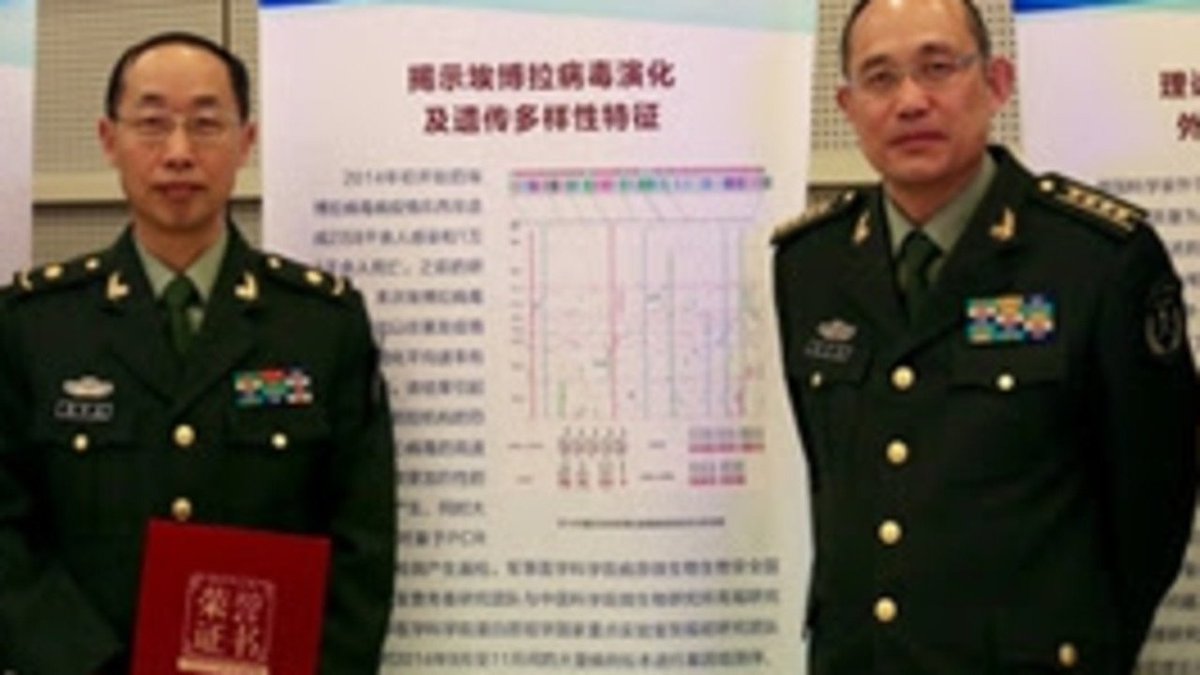
1. Yang
2. A jacobin capuchin dangling a flagellin pangolin on a javelin while playing a mandolin and strangling a mannequin on a paladin's palanquin, said Saladin
More to come tomorrow!
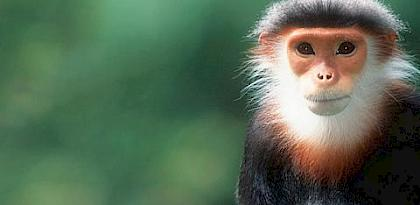
3. Yigang Tong
https://t.co/CYtqYorhzH
Archived: https://t.co/ncz5ruwE2W

4. YT Interview
Some bats & pangolins carry viruses related with SARS-CoV-2, found in SE Asia and in Yunnan, & the pangolins carrying SARS-CoV-2 related viruses were smuggled from SE Asia, so there is a possibility that SARS-CoV-2 were coming from
Pangolins, September 2019 and PLA are the key to this mystery
Stay Tuned!
1. Yang
Meet Yang Ruifu, CCP's biological weapons expert https://t.co/JjB9TLEO95 via @Gnews202064
— Billy Bostickson \U0001f3f4\U0001f441&\U0001f441 \U0001f193 (@BillyBostickson) October 11, 2020
Interesting expose of China's top bioweapons expert who oversaw fake pangolin research
Paper 1: https://t.co/TrXESKLYmJ
Paper 2:https://t.co/9LSJTNCn3l
Pangolinhttps://t.co/2FUAzWyOcv pic.twitter.com/I2QMXgnkBJ
2. A jacobin capuchin dangling a flagellin pangolin on a javelin while playing a mandolin and strangling a mannequin on a paladin's palanquin, said Saladin
More to come tomorrow!
3. Yigang Tong
https://t.co/CYtqYorhzH
Archived: https://t.co/ncz5ruwE2W
4. YT Interview
Some bats & pangolins carry viruses related with SARS-CoV-2, found in SE Asia and in Yunnan, & the pangolins carrying SARS-CoV-2 related viruses were smuggled from SE Asia, so there is a possibility that SARS-CoV-2 were coming from
