
On the face of it, this looks good, govt extending the Seasonal Agricultural Workers' visa scheme from 10,000 to 30,000 to address lack of labour for farming industry after the end of Free Movement.
Here's grinchy Zoe to explain why it's bad. Sorry...
The "pick for Britain" drive to get British workers into these jobs was a car wreck, filling just 15% of vacancies.
Two years ago they introduced a pilot visa scheme for this, originally to bring over 2,500 workers for 6 months at a time.
I mean, that is the meaning of a pilot scheme... right? https://t.co/kGmD7kRB1d
No prizes for the answer.
A good e.g. of a system like that was Free Movement. A system based on the rights of migrant workers.
It is a strictly time-limited visa, restricting workers to 6 months in and 6 months out of the country. It relies on workers being housed on-site in shared accommodation.
A person accommodated at their work place & who must leave in 6-months is not a person empowered to challenge exploitative conditions.
The government is expanding the scheme without, as far as I know, hearing that evidence.
Calling it a pilot is a lie. There are no plans to publish any assessment, they're just barrelling on.
More from Government

Long thread: Because I couldn’t find anything comprehensive, I’m just going to post everything I’ve seen in the news/Twitter about Trump’s activities related to the Jan 6th insurrection. I think the timing & context of his actions/inactions will matter a lot for a senate trial.
12/12: The earlier DC protest over the electoral college vote during clearly inspired Jan 6th. On Dec 12th, he tweeted: “Wow! Thousands of people forming in Washington (D.C.) for Stop the Steal. Didn’t know about this, but I’ll be seeing them! #MAGA.”
12/19: Trump announces the Jan. 6th event by tweeting, “Big protest in D.C. on January 6th. Be there, will be wild!” Immediately, insurrectionists begin to discuss the “Wild Protest.” Just 2 days later, this UK political analyst predicts the violence
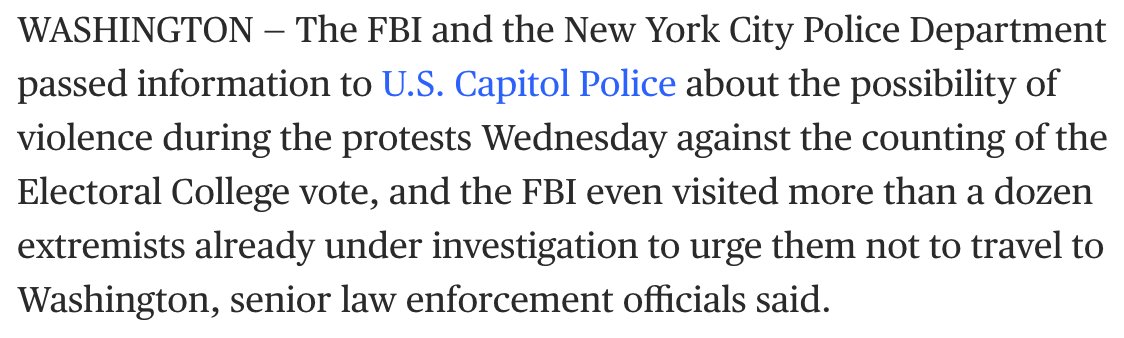
12/26-27: Trump announces his participation on Twitter. On Dec. 29, the FBI sends out a nationwide bulletin warning legislatures about attacks https://t.co/Lgl4yk5aO1
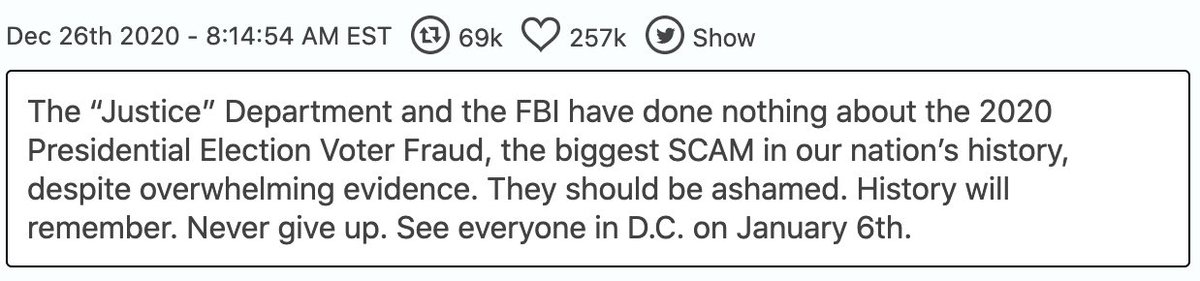
1/1: Trump tweets the time of his protest. Then he retweets “The calvary is coming” on Jan. 6!” Sounds like a war? About this time, the FBI begins visiting right wing extremists to tell them not to go--does the FBI tell the president? https://t.co/3OxnB2AHdr
12/12: The earlier DC protest over the electoral college vote during clearly inspired Jan 6th. On Dec 12th, he tweeted: “Wow! Thousands of people forming in Washington (D.C.) for Stop the Steal. Didn’t know about this, but I’ll be seeing them! #MAGA.”
Jumping in for @DCist/@wamu885 this evening. The scene rn coming up 17th Street from BLM Plaza. pic.twitter.com/Fn9aukjEPW
— Matt Blitz (@WhyBlitz) December 12, 2020
12/19: Trump announces the Jan. 6th event by tweeting, “Big protest in D.C. on January 6th. Be there, will be wild!” Immediately, insurrectionists begin to discuss the “Wild Protest.” Just 2 days later, this UK political analyst predicts the violence
On January 6, armed Trumpist militias will be rallying in DC, at Trump's orders. It's highly likely that they'll try to storm the Capitol after it certifies Joe Biden's win. I don't think this has sunk in yet.
— Arieh Kovler (@ariehkovler) December 21, 2020
12/26-27: Trump announces his participation on Twitter. On Dec. 29, the FBI sends out a nationwide bulletin warning legislatures about attacks https://t.co/Lgl4yk5aO1
1/1: Trump tweets the time of his protest. Then he retweets “The calvary is coming” on Jan. 6!” Sounds like a war? About this time, the FBI begins visiting right wing extremists to tell them not to go--does the FBI tell the president? https://t.co/3OxnB2AHdr



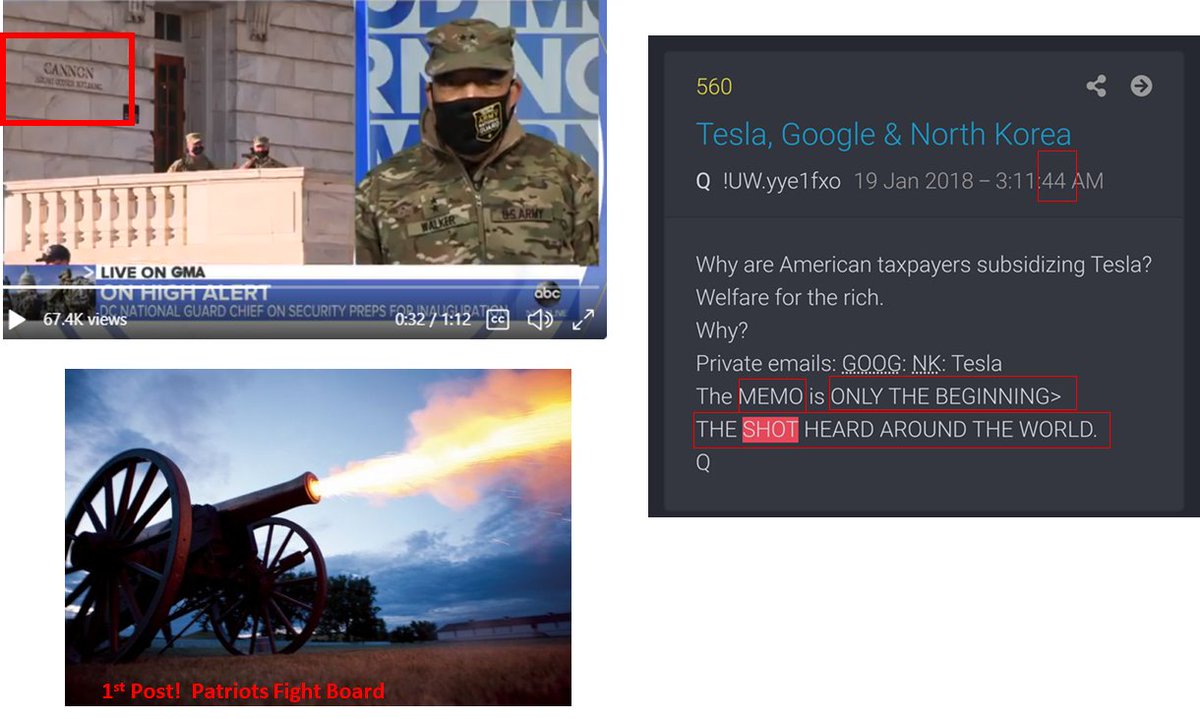
'Peaceful transition to Military Power....'
Cannon
44
....heard around the world
NG - High Alert https://t.co/lfeSiUCCRB
We Will Never Forget
44
Stage is set
https://t.co/h6G3LCevII
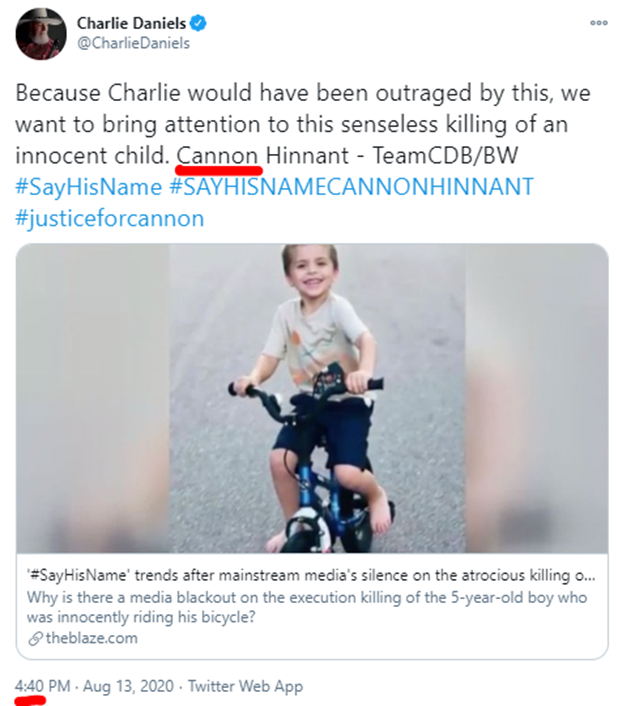
Following the 44 trail of breadrumbs
https://t.co/PcX0uKUEUW
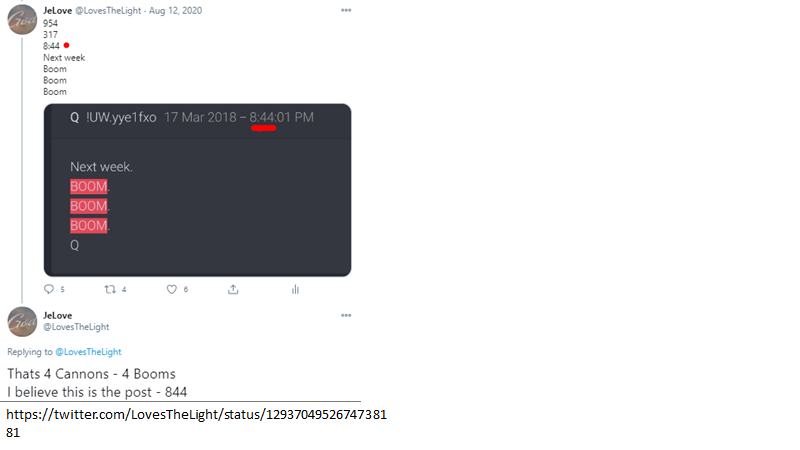
Cannon
44
....heard around the world
NG - High Alert https://t.co/lfeSiUCCRB
\U0001f4a5 BOOM \U0001f4a5
— R\u0113d.P\u012bll.Ph\u0101rm\u0101c\u012bst (@Red_Pill_Pharma) January 18, 2021
30 secs in - what do I hear?
\u2018Peaceful transition to military power\u2019
\U0001f1fa\U0001f1f8 MILITARY IS THE ONLY WAY \U0001f1fa\U0001f1f8 pic.twitter.com/9NPMT7N7Qy
We Will Never Forget
44
Stage is set
https://t.co/h6G3LCevII
The stage is set. Staged.
— JeLove (@LovesTheLight) November 7, 2020
Where? (the) Delaware.
10:44
Purple
First graphic in 98https://t.co/PKHlxp0rzS pic.twitter.com/XCx6pVQTHx
Following the 44 trail of breadrumbs
https://t.co/PcX0uKUEUW
Boom, Boom, Boom pic.twitter.com/ZcZXAgL0Qf
— JeLove (@LovesTheLight) August 13, 2020



Labour Grandees are listed in Sir Keir Starmer's colleague Jeffrey Epstein's ''Little Black Book''; Blair, Mandelson and Alastair Campbell. COINCIDENTLY, Keir Starmer and some of the same people have connections to ANOTHER of the worlds most prolific peadophiles. #StarmerOut

Starmer failed to bring charges against Jimmy Savile for paedophilia. The decision was made despite the Crown Prosecution Service receiving substantial evidence of his crimes from witnesses and victims several years before Savile died in 2011. #StarmerOut https://t.co/PNyX5uSAkw

With a past like hers, Margaret Hodge might show a bit more humility.
In the Eighties Hodge was aware of previous child sex abuse in the care homes for which she was responsible, and did nothing about it. #LabourLeaks #StarmerOut
As leader of Islington Council, a post she held from 1982-92, Margaret Hodge was aware of previous, horrendous child sex abuse in the care homes for which she was responsible, and did nothing about it. #LabourLeaks #StarmerOut #CSA
She was guilty of rather more than a casual failure of oversight. In an open letter to the BBC after it investigated a range of monstrous abuse (child prostitution, torture, alleged murders), Hodge libelled one of its victims as “seriously disturbed”. #LabourLeaks #StarmerOut
Starmer failed to bring charges against Jimmy Savile for paedophilia. The decision was made despite the Crown Prosecution Service receiving substantial evidence of his crimes from witnesses and victims several years before Savile died in 2011. #StarmerOut https://t.co/PNyX5uSAkw
With a past like hers, Margaret Hodge might show a bit more humility.
In the Eighties Hodge was aware of previous child sex abuse in the care homes for which she was responsible, and did nothing about it. #LabourLeaks #StarmerOut
As leader of Islington Council, a post she held from 1982-92, Margaret Hodge was aware of previous, horrendous child sex abuse in the care homes for which she was responsible, and did nothing about it. #LabourLeaks #StarmerOut #CSA
She was guilty of rather more than a casual failure of oversight. In an open letter to the BBC after it investigated a range of monstrous abuse (child prostitution, torture, alleged murders), Hodge libelled one of its victims as “seriously disturbed”. #LabourLeaks #StarmerOut
You May Also Like










I hate when I learn something new (to me) & stunning about the Jeff Epstein network (h/t MoodyKnowsNada.)
Where to begin?
So our new Secretary of State Anthony Blinken's stepfather, Samuel Pisar, was "longtime lawyer and confidant of...Robert Maxwell," Ghislaine Maxwell's Dad.
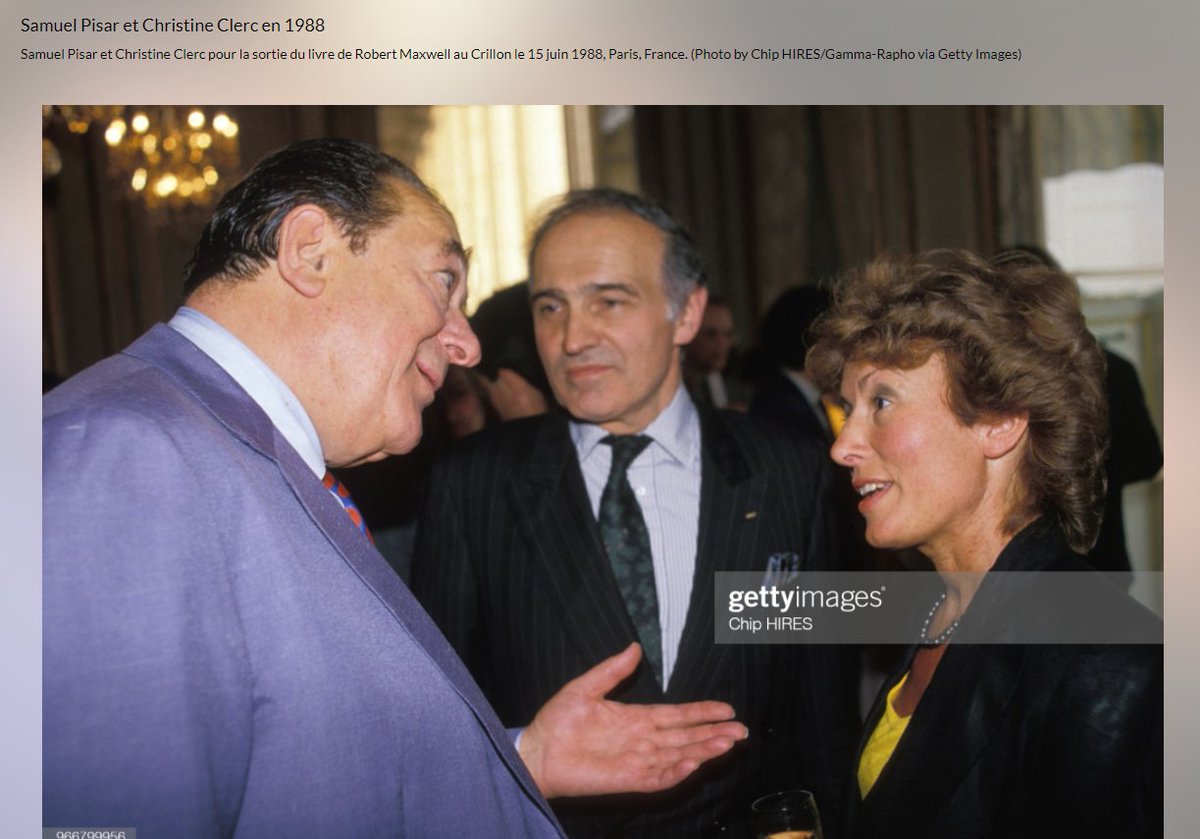
"Pisar was one of the last people to speak to Maxwell, by phone, probably an hour before the chairman of Mirror Group Newspapers fell off his luxury yacht the Lady Ghislaine on 5 November, 1991." https://t.co/DAEgchNyTP
OK, so that's just a coincidence. Moving on, Anthony Blinken "attended the prestigious Dalton School in New York City"...wait, what? https://t.co/DnE6AvHmJg
Dalton School...Dalton School...rings a
Oh that's right.
The dad of the U.S. Attorney General under both George W. Bush & Donald Trump, William Barr, was headmaster of the Dalton School.
Donald Barr was also quite a
I'm not going to even mention that Blinken's stepdad Sam Pisar's name was in Epstein's "black book."
Lots of names in that book. I mean, for example, Cuomo, Trump, Clinton, Prince Andrew, Bill Cosby, Woody Allen - all in that book, and their reputations are spotless.
Where to begin?
So our new Secretary of State Anthony Blinken's stepfather, Samuel Pisar, was "longtime lawyer and confidant of...Robert Maxwell," Ghislaine Maxwell's Dad.
"Pisar was one of the last people to speak to Maxwell, by phone, probably an hour before the chairman of Mirror Group Newspapers fell off his luxury yacht the Lady Ghislaine on 5 November, 1991." https://t.co/DAEgchNyTP
OK, so that's just a coincidence. Moving on, Anthony Blinken "attended the prestigious Dalton School in New York City"...wait, what? https://t.co/DnE6AvHmJg
Dalton School...Dalton School...rings a
Oh that's right.
The dad of the U.S. Attorney General under both George W. Bush & Donald Trump, William Barr, was headmaster of the Dalton School.
Donald Barr was also quite a
Donald Barr had a way with words. pic.twitter.com/JdRBwXPhJn
— Rudy Havenstein, listening to Nas all day. (@RudyHavenstein) September 17, 2020
I'm not going to even mention that Blinken's stepdad Sam Pisar's name was in Epstein's "black book."
Lots of names in that book. I mean, for example, Cuomo, Trump, Clinton, Prince Andrew, Bill Cosby, Woody Allen - all in that book, and their reputations are spotless.