Did you know?
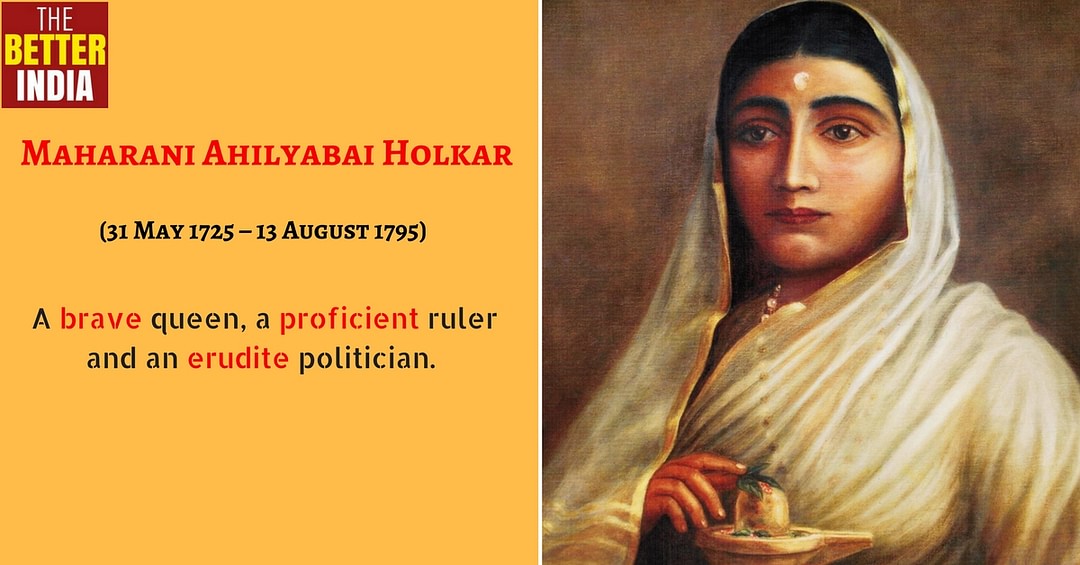
Ahilyabai Holkar was one of India's
greatest women rulers of all time.
Ahilyabai was Born on May 31,1725 in the village of Chondi,Jamkhed distt,Maharashtra to a man named Mankoji Shinde,who was the Patil(Chief) of a village and a member of proud Dhangar Community.
Despite the fact that girls' education was a farther dream in those days, Ahilyabai was homeschooled by her father.
Ahilya didn't belong to any royal family but in a twist of fate she is still remembered as one of the most revered Queen in the history.
While they were living their humdrum lives, one day Malhar Rao Holkar, commander of the Peshwa Bajirao & Lord of the Malwa stopped in Chondi on his way to Pune, where he couldn't help but notice a young 8yrs old Ahilyabai in the temple service feeding the poor & hungry.
He was so impressed by the sheer innocence&beauty with simplicity character of Ahilyabai dat he asked her hand in marriage for his son Khanderao Holkar.Just like that she got married to Khanderao in 1733 at a tender age of 8&became a bride of esteemed Maratha community of Holkars
But destiny had something else in store for her as her husband died in the Battle of Kumbher in 1754 leaving her widow at 29.Distressed Ahilyabai was to commit Sati when her father-in-law Malhar Rao refused to let it happen.