

7 Notion hacks in less than 5 minutes:


If you enjoyed this thread:
1. Follow me @heyeaslo for more Notion tips.
2. RT the tweet below to share it with more people. https://t.co/kSsTHDIb35
7 Notion hacks in less than 5 minutes:
— Easlo (@heyeaslo) December 19, 2022
More from Easlo



I asked, "What’s the best free tool for startups?"
I received 200+ replies.
Here are 10 free tools every startup must know:
Logomak
Pick the best colors and fonts for your logo in just a few minutes.
🔗 https://t.co/rlPSWrjm07

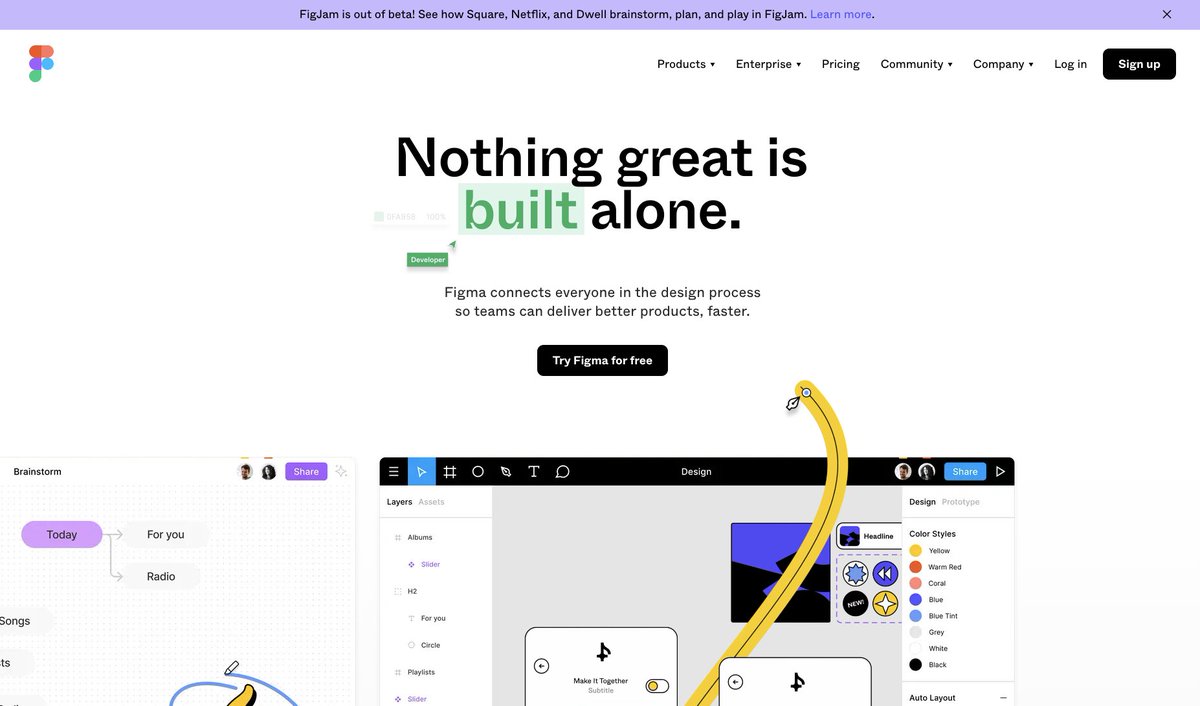
Figma
Connects everyone in the design process so teams can deliver better products, faster.
🔗 https://t.co/b3ZNU3LbpN
Canva
Create beautiful designs with your team. Use Canva's drag-and-drop feature and layouts to design, share and print business cards, logos, presentations and more.
🔗 https://t.co/kGTrepMeaV

Vercel
Combines the best developer experience with an obsessive focus on end-user performance. Our platform enables frontend teams to do their best work.
🔗 https://t.co/KduA7XhoMN

I received 200+ replies.
Here are 10 free tools every startup must know:
Logomak
Pick the best colors and fonts for your logo in just a few minutes.
🔗 https://t.co/rlPSWrjm07
Figma
Connects everyone in the design process so teams can deliver better products, faster.
🔗 https://t.co/b3ZNU3LbpN
Canva
Create beautiful designs with your team. Use Canva's drag-and-drop feature and layouts to design, share and print business cards, logos, presentations and more.
🔗 https://t.co/kGTrepMeaV
Vercel
Combines the best developer experience with an obsessive focus on end-user performance. Our platform enables frontend teams to do their best work.
🔗 https://t.co/KduA7XhoMN
More from All












You May Also Like







I just finished Eric Adler's The Battle of the Classics, and wanted to say something about Joel Christiansen's review linked below. I am not sure what motivates the review (I speculate a bit below), but it gives a very misleading impression of the book. 1/x
The meat of the criticism is that the history Adler gives is insufficiently critical. Adler describes a few figures who had a great influence on how the modern US university was formed. It's certainly critical: it focuses on the social Darwinism of these figures. 2/x
Other insinuations and suggestions in the review seem wildly off the mark, distorted, or inappropriate-- for example, that the book is clickbaity (it is scholarly) or conservative (hardly) or connected to the events at the Capitol (give me a break). 3/x
The core question: in what sense is classics inherently racist? Classics is old. On Adler's account, it begins in ancient Rome and is revived in the Renaissance. Slavery (Christiansen's primary concern) is also very old. Let's say classics is an education for slaveowners. 4/x
It's worth remembering that literacy itself is elite throughout most of this history. Literacy is, then, also the education of slaveowners. We can honor oral and musical traditions without denying that literacy is, generally, good. 5/x
As someone\u2019s who\u2019s read the book, this review strikes me as tremendously unfair. It mostly faults Adler for not writing the book the reviewer wishes he had! https://t.co/pqpt5Ziivj
— Teresa M. Bejan (@tmbejan) January 12, 2021
The meat of the criticism is that the history Adler gives is insufficiently critical. Adler describes a few figures who had a great influence on how the modern US university was formed. It's certainly critical: it focuses on the social Darwinism of these figures. 2/x
Other insinuations and suggestions in the review seem wildly off the mark, distorted, or inappropriate-- for example, that the book is clickbaity (it is scholarly) or conservative (hardly) or connected to the events at the Capitol (give me a break). 3/x
The core question: in what sense is classics inherently racist? Classics is old. On Adler's account, it begins in ancient Rome and is revived in the Renaissance. Slavery (Christiansen's primary concern) is also very old. Let's say classics is an education for slaveowners. 4/x
It's worth remembering that literacy itself is elite throughout most of this history. Literacy is, then, also the education of slaveowners. We can honor oral and musical traditions without denying that literacy is, generally, good. 5/x