A Thread on the Boss himself @Mitesh_Engr
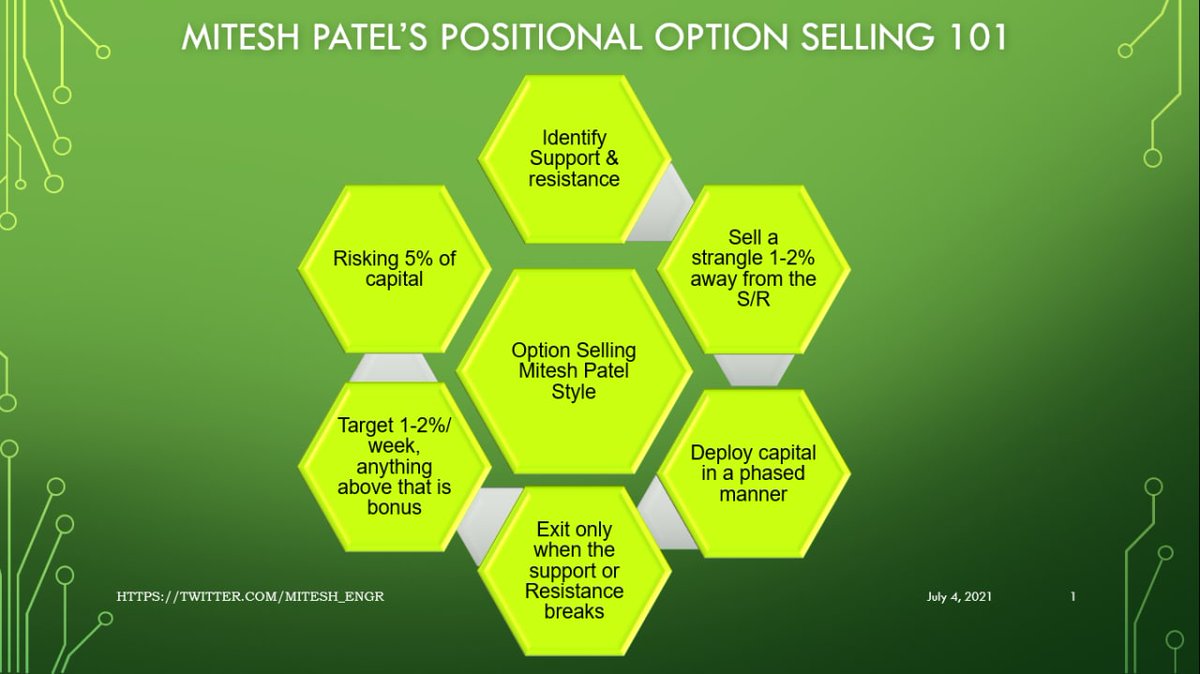
Mitesh Sir's Positional Option Selling 101:
• How to find direction
• Which options to sell
• How to deploy capital
• Exit criteria
• What ROI he targets weekly
• What % risk he takes
Done with the help of @niki_poojary
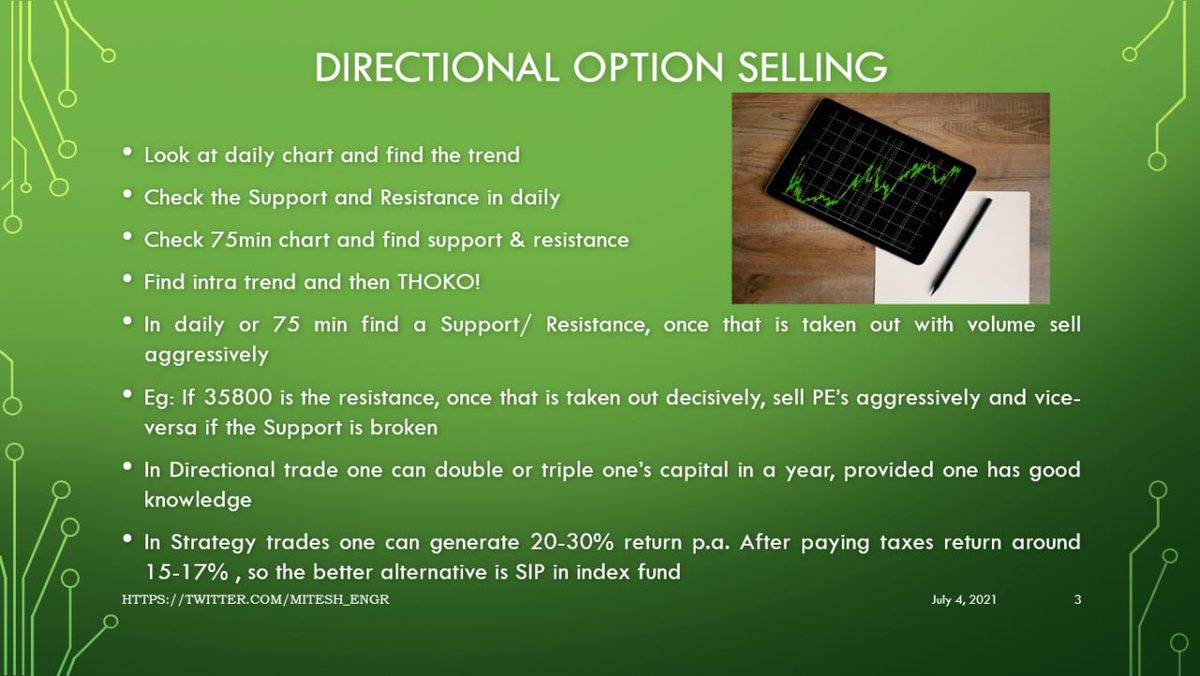
How @Mitesh_Engr Sir finds the direction?
• Daily charts S/R
• 75 min charts S/R
• Intraday trend
• Always play directional
• Never trades in strategies
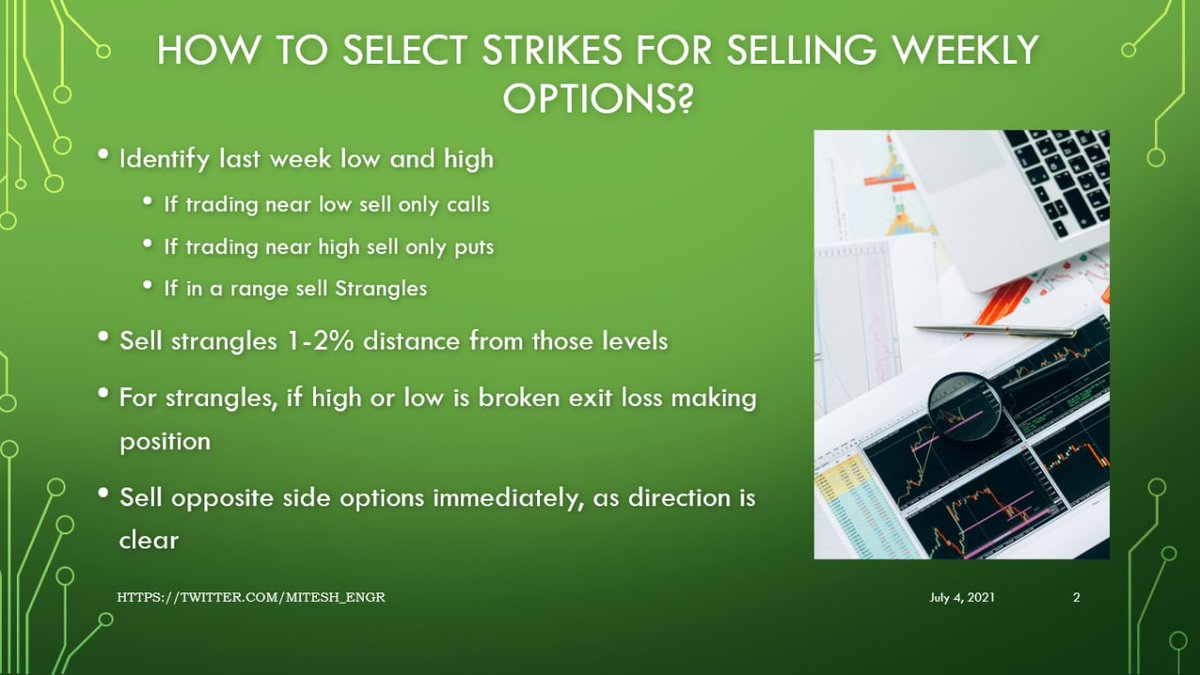
Which options to sell in weekly expiry according to @Mitesh_Engr?
• Weekly candle High/Low
• Sell 1% away options from those
• Exit when levels breached
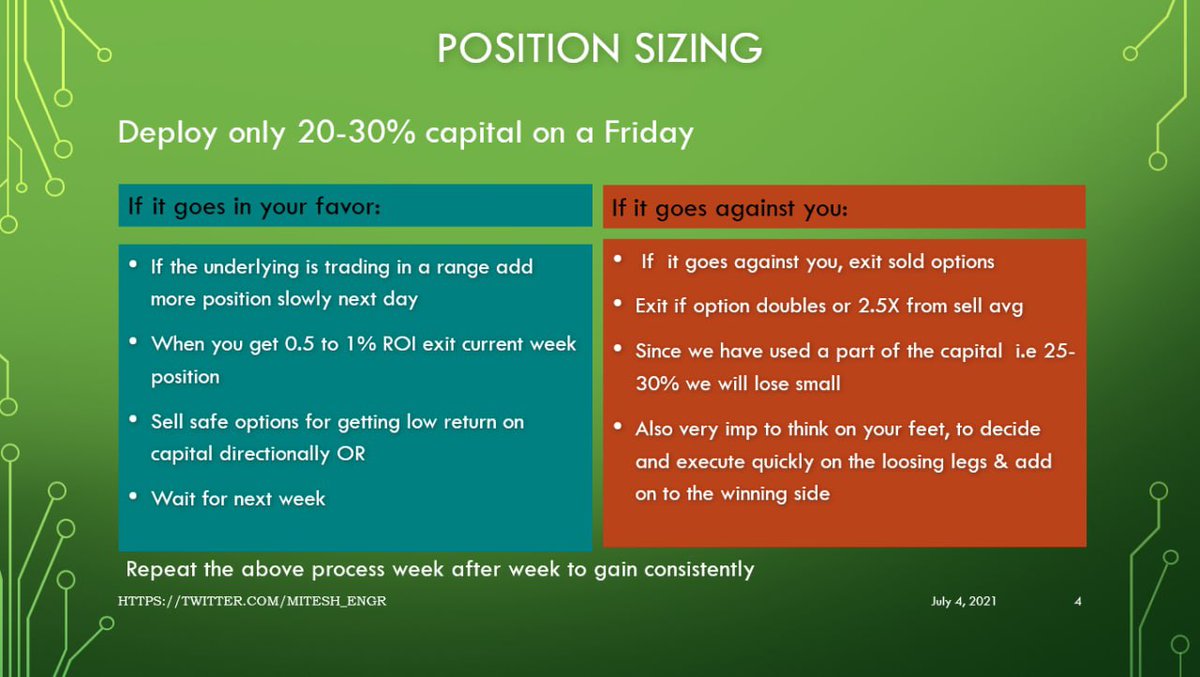
Position Sizing by @Mitesh_Engr Sir.
How to deploy your capital?
• First sell 20%
• Pyramid the next day
• When to exit
• What to do when view goes wrong
• What to do with idle capital
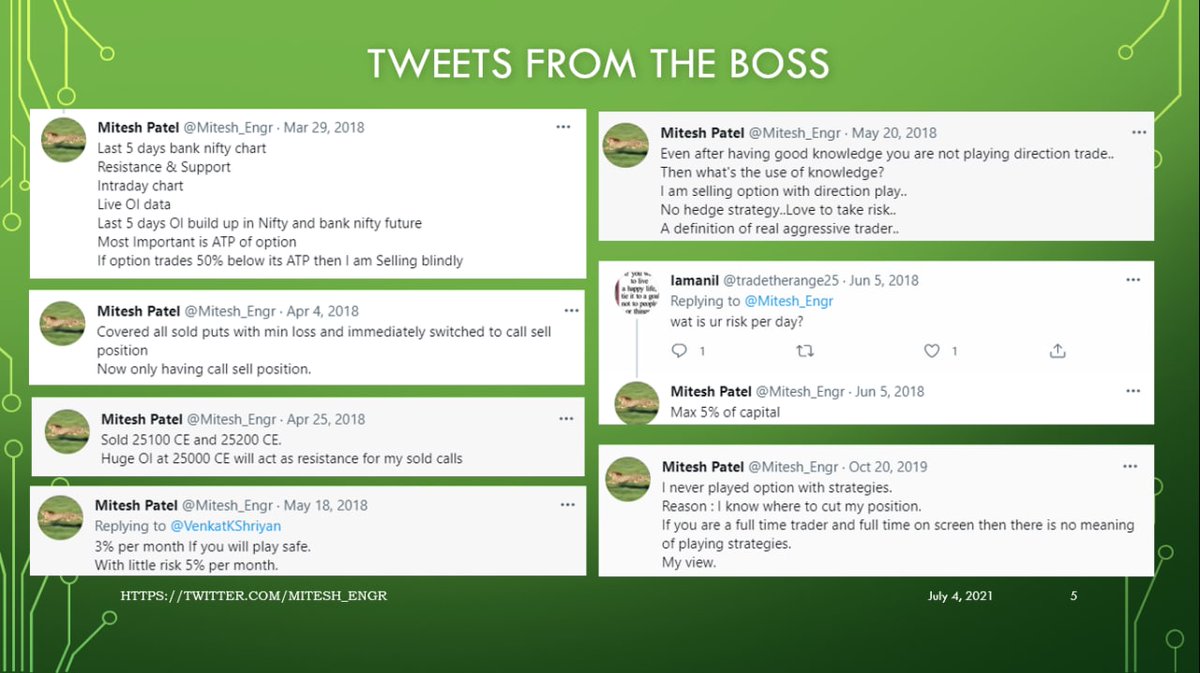
Some important tweets of @Mitesh_Engr Sir
• What Data to look at
• ROI for safe players per month
• Max risk per day
• Gather knowledge and play directional
• Never play strategies