Mollyycolllinss Authors Eric Basmajian
7 days
30 days
All time
Recent
Popular

It is difficult to change a 10-year trend.
Long-term expectations do not change as frequently as daily market fluctuations would make it seem.
A quick update on Treasury rates through the lens of the DKW model
*As of Dec. 31*
1/
In previous threads, I made the distinction between long-term secular trends in growth and inflation and shorter-term (2-6 quarters) trends in nGDP
Right now, the long-term trends are unaltered because long-term trends just don't change that fast but we have a very strong cyclical upturn in the economy, centered primarily on the shift to goods consumption bolstering the manufacturing sector and industrial commodities.
3/
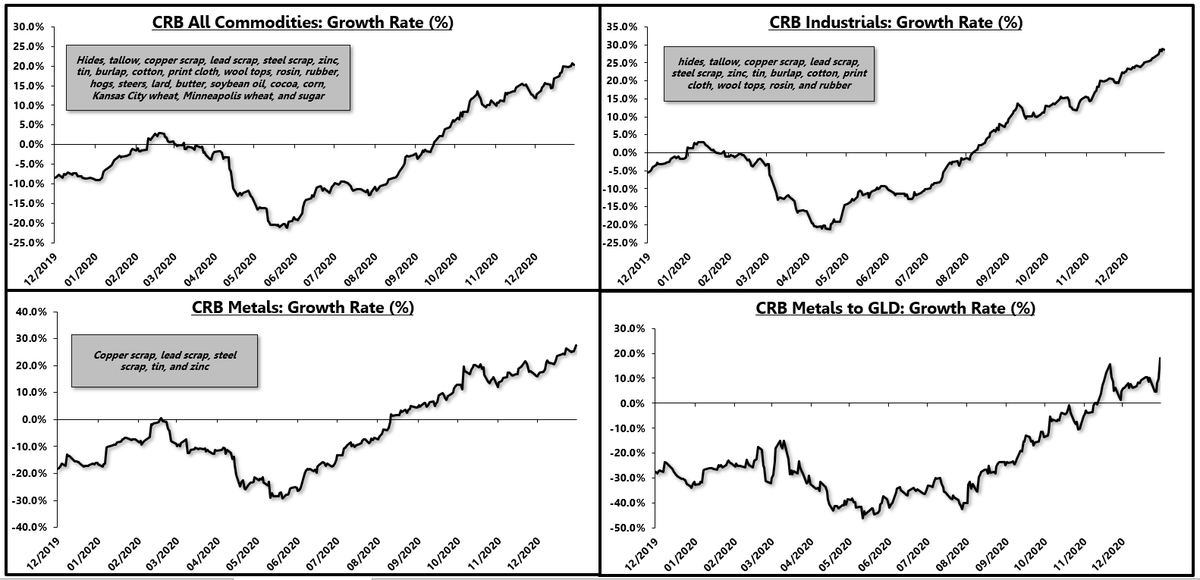
As long as the industrial sector continues to roar, TSY rates will have an upward bias as rates generally follow the trend in nGDP growth
A 10yr TSY has longterm expectations embedded in the rate so several qrters, while important, won't necessarily change the longterm trend
4/
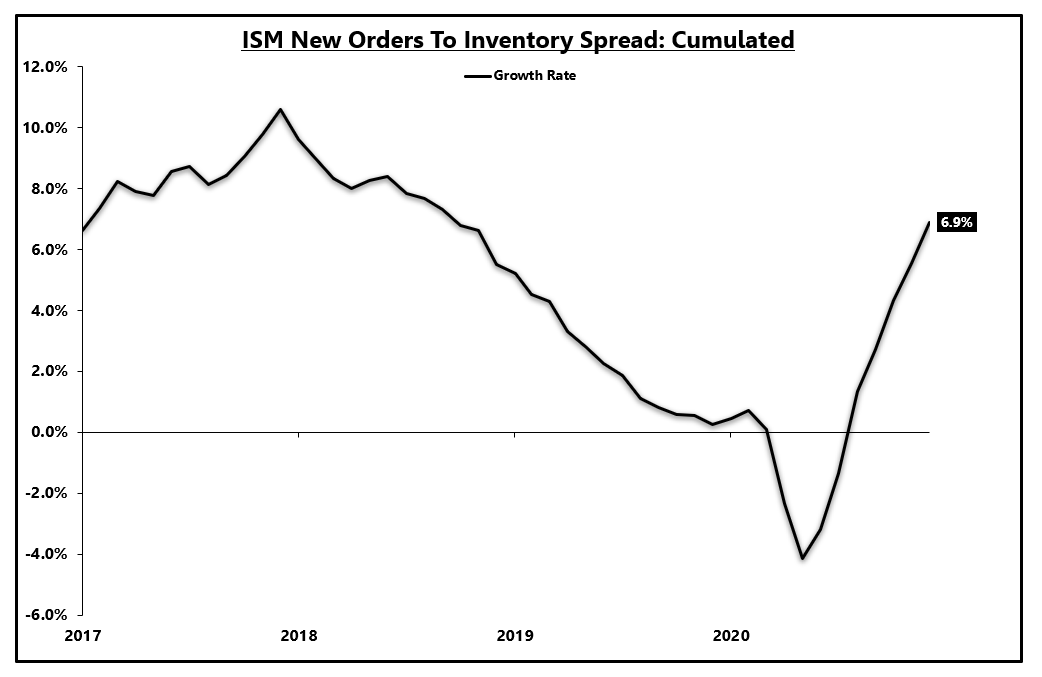
This is confirmed by the Dec update to the DKW model which breaks down *actual* inflation expectations, the expected real short-term rate (real growth), term premium, liquidity premium etc.
The DKW model is one of many models that is useful but has many limitations.
5/
Long-term expectations do not change as frequently as daily market fluctuations would make it seem.
A quick update on Treasury rates through the lens of the DKW model
*As of Dec. 31*
1/
In previous threads, I made the distinction between long-term secular trends in growth and inflation and shorter-term (2-6 quarters) trends in nGDP
Consensus continues to conflate the inflation story, mixing and matching long-term and short-term charts to fit what is generally a secular inflation narrative.
— Eric Basmajian (@EPBResearch) January 4, 2021
Here are my two cents to make the distinction clear.
1)
Right now, the long-term trends are unaltered because long-term trends just don't change that fast but we have a very strong cyclical upturn in the economy, centered primarily on the shift to goods consumption bolstering the manufacturing sector and industrial commodities.
3/
As long as the industrial sector continues to roar, TSY rates will have an upward bias as rates generally follow the trend in nGDP growth
A 10yr TSY has longterm expectations embedded in the rate so several qrters, while important, won't necessarily change the longterm trend
4/
This is confirmed by the Dec update to the DKW model which breaks down *actual* inflation expectations, the expected real short-term rate (real growth), term premium, liquidity premium etc.
The DKW model is one of many models that is useful but has many limitations.
5/