I SILENTLY WEPT, while preparing this thread/post.. No veteran must suffer this humiliation, but Nehru was a .....
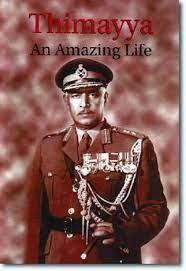
#GeneralThimayya is not born in every generation. The likes of him there will seldom be a soldier. The General is a man's man, Army his soul and his soul the Army.

Remembering #KodenderaSubbaiahThimmayya the Chief of Army Staff bt 1957-61 & the only Bharatiya to command an Infantry Brigade during WW2 & regarded as the most distinguished Combat Officer the Bharatiya Army produced.

Gen K S Thimmayya was born on this day on 1906 at Madikeri
and came from a family of veterans.
As the time for Independence approached, Field Marshal Sir Claude Achinlek asked Thimmayya to return back to Bharat & was appointed as Major General.
Once in Bharat, Thimmayya immersed in various works, from weapon procurement to refugee
handling & battle against Pakistan.
The First Bitter Fight Between Nehru & Thimmayya Happened Then,
Thimmayya Asked For 3 Months To Clear Pakistan Occupied Kashmir, Pleaded Nehru not to approach United Nations, but Nehru went ahead & also transferred him to head IMA.
In 1954, Lt.Gen Thimmayya was awarded with Padmabhushan & in 1957, Gen K S Thimmayya took over Bharatiya Army.
Like the mighty Himalaya’s, the blunders of Nehru was Himalayan too, in 1959, Gen Thimmayya Resigned after a fight with the then defence minister & Nehru's close aide
Krishna Menon, Nehru didn't approve the resignation & also never heeded to the valid Concerns raided by Gen Thimmayya.

In his book 1962 - THE WAR THAT WASN’T, Author Shiv Kumar Verma gives another insight into the Himalayan Blunder caused by Nehru…
An excerpt from the book..
Nehru was waiting for Thimayya and for the first time, the normally reticent Timmy exchanged angry words with the prime minister. He told Nehru that his arbitrary decision of making NEFA [North-East Frontier Agency] the responsibility of the army, made public in Parliament, was
preposterous and completely against Indian interests. Thimayya felt that Nehru had completely compromised the army.

Without providing the additional resources required, handing over the borders to the army was a meaningless gesture; this would allow the Chinese the opportunity
to claim that the Indians were the aggressors, for they always went to great pains to describe their own troops as border guards. Thimayya asked Nehru to find a way out of the mess in the next couple of weeks, after which he departed. Immediately after Thimayya’s departure, the
shaken Nehru summoned Menon to Teen Murti.

Both Nehru and Menon knew that Nehru was in serious trouble. He had got away with the admission in Parliament earlier in the day only because the triple whammy—ongoing clashes on the border, the construction of National Highway G219
across the Aksai Chin and the Khenzemane and Longju incidents—had come as a shock to the members of the House. At any rate, it was unlikely that any of the parliamentarians knew the terrain or understood matters pertaining to the military to raise any meaningful questions.
Thimayya wanted Nehru to undo the mistake; but then he would be committing political hara-kiri. The threat of Thimayya taking over the reins of government, at least in Nehru’s mind, was very real.

Not only did the Nehru-Menon team now have to survive, they had to neutralize
Thimayya. 3 days later, Menon sent for Thimayya in ‘a highly excited state of mind’ and vented his anger at the chief for having approached the prime minister directly, suggesting instead that the matter should have been resolved at his level. Threatening Thimayya of ‘possible
political repercussions if the matter became public’ Krishna Menon ended the meeting. A seething Thimayya returned to his office, and after a brief conversation with his wife, Neena, promptly sent in his resignation letter.

The letter, which was received by Teen Murti on the
afternoon of 31 August, was put up to Nehru who promptly sent for Thimayya in the afternoon. After a long conversation Nehru persuaded the army chief to withdraw his resignation letter in the larger interest of the nation, especially since the problem with the Chinese had
flared up, the matter of the resignation was deemed closed.
However, after Thimayya’s departure, news of his resignation was deliberately leaked to the media while the subsequent rescinding of the letter was held back. Quite expectedly, the Thimayya resignation made banner
headlines the next morning. By the evening the PTI had announced that Krishna Menon had also resigned, only to withdraw its report a short while later.

On 2 Sept 1959, Nehru in Loksabha said that he had persuaded the chief to withdraw his resignation. He then went on to speak
about the supremacy of the civilian authority over the military and then, had surprisingly, proceeded to castigate Thimayya, saying the issues that led to his resignation were ‘rather trivial and of no consequence’, and that they arose ‘from temperamental differences’. He then
chided the chief and reproached him for ‘wanting to quit in the midst of the Sino-Indian border crisis’.
Even today, the contents of Thimayya’s resignation letter remain a highly guarded secret. Instead, vague stories about Thimayya’s resignation were routinely floated.
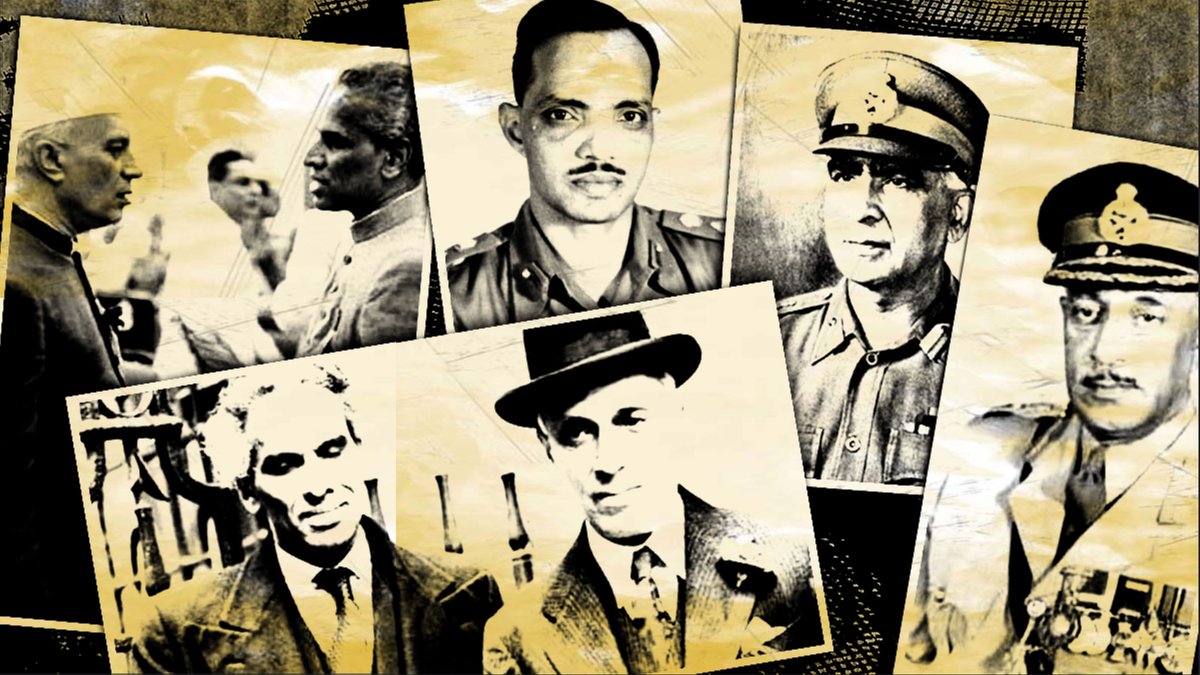
Nehru, who could do no wrong in the eyes of the public, had betrayed General Thimayya. Trapped in this bad situation, the chief had no option but to quietly endure the humiliation and get on with the job of trying to prepare the army to face the Chinese when the need arose.
Nehru's attitude towards Thimayya was damaging to the chief as well as the army. A whispering campaign started that speculated on the ‘rather trivial’ reasons for Thimayya’s resignation. That the chief was unhappy with the defence minister’s insistence on promoting certain
officers was a well-known fact and pre-dated the Longju incident. It was hinted that the ‘temperamental differences’ were a direct result of this difference of opinion. General Thimayya was, by all accounts, a seasoned, disciplined soldier who would hardly have made issues over
trifles. Only overriding national interests could have provoked him to take this step. Further, as a disciplined soldier he had accepted his prime minister’s assurance and withdrawn his resignation. From the day he had taken charge, Thimayya had been focused on redressing the
various problems that faced the Indian Army, especially the evolving civil-military equation where the army seemed quite removed from the decision-making process on matters relating to defence. However, he found himself up against a wall in the form of the Ministry of Defence,
On 07th May 1961, after 35 years of Uncompromising Service, General K S Thimmayya retired from service, The United Nations invited him to head its peacekeeping force in Cyprus where he passed away on 18-12-65.

#Vandemataram

More from Sheshapatangi1 ಪ್ರಭಾ ಮಗ ಈ ಅಲೆಮಾರಿ ಅಯ್ಯಂಗಾರಿ
More from All

You May Also Like

क्या आप जानते हैं कि क्या है, पितृ पक्ष में कौवे को खाना देने के पीछे का वैज्ञानिक कारण!

श्राद्ध पक्ष में कौओं का बड़ा ही महत्व है। कहते है कौआ यम का प्रतीक है, यदि आपके हाथों दिया गया भोजन ग्रहण कर ले, तो ऐसा माना जाता है कि पितरों की कृपा आपके ऊपर है और वे आपसे ख़ुश है।


कुछ लोग कहते हैं की व्यक्ति मरकर सबसे पहले कौवे के रूप में जन्म लेता है और उसे खाना खिलाने से वह भोजन पितरों को मिलता है

शायद हम सबने अपने घर के किसी बड़े बुज़ुर्ग, किसी पंडित या ज्योतिषाचार्य से ये सुना होगा। वे अनगिनत किस्से सुनाएंगे, कहेंगे बड़े बुज़ुर्ग कह गए इसीलिए ऐसा करना

शायद ही हमें कोई इसके पीछे का वैज्ञानिक कारण बता सके।

हमारे ऋषि मुनि और पौराणिक काल में रहने वाले लोग मुर्ख नहीं थे! कभी सोचियेगा कौवों को पितृ पक्ष में खिलाई खीर हमारे पूर्वजों तक कैसे पहुंचेगी?

हमारे ऋषि मुनि विद्वान थे, वे जो बात करते या कहते थे उसके पीछे कोई न कोई वैज्ञानिक कारण छुपा होता था।

एक बहुत रोचक तथ्य है पितृ पक्ष, भादो( भाद्रपद) प्रकृति और काक के बीच।

एक बात जो कह सकते कि हम सब ने स्वतः उग आये पीपल या बरगद का पेड़/ पौधा किसी न किसी दीवार, पुरानी

इमारत, पर्वत या अट्टालिकाओं पर ज़रूर देखा होगा। देखा है न?

ज़रा सोचिये पीपल या बरगद की बीज कैसे पहुंचे होंगे वहाँ तक? इनके बीज इतने हल्के भी नहीं होते के हवा उन्हें उड़ाके ले जा सके।